Earlier this week, NewsWhip’s Social Media Editor Liam Corcoran spoke on the topic of attracting and keeping new readers through social media at the International Newsroom Summit in Amsterdam. The key points of the talk are outlined here.
To many, ‘going viral’ has an air of mystery. There’s plenty of debate around the sorts of headlines that should be used, the role of the ‘curiosity gap’, and the framing of the story itself.
Social distribution is something that many publishers would like to be able to harness better. Using social media to reach new and existing readers without waiting for them to come to your site is the core attraction.
Most of what NewsWhip knows about social distribution and virality comes from our content discovery platform, Spike. Up to 250,000 new stories pass through Spike every day, from tens of thousands of sources.

The above screenshot shows a breaking news story well on the way to achieving major shares, as identified in Spike.
With all the data we gather in Spike, as well as what we’ve learned by publishing our monthly rankings of the most shared sites on Facebook and Twitter, we’ve noticed a few common traits amongst publishers that are successful in getting their stories shared.
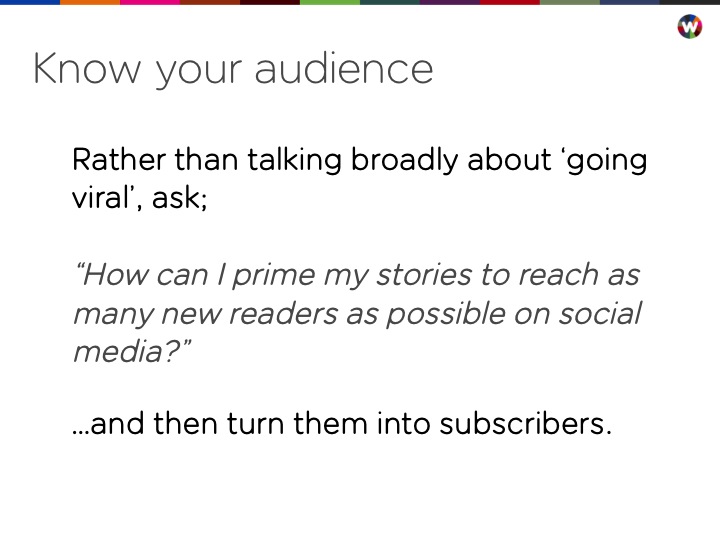
Effective social distribution means that all stories have the potential to be shared on social media, upping average engagement rates and helping get your stories beneath a lot of new eyes.
Stories can go viral within a niche audience. Readers interested in the latest tech news or environment issues will share stories with their friends and colleagues, ensuring that a valuable audience is reached.
The Harvard Business Review is an example of a niche publisher that leverages sharing to reach new readers.
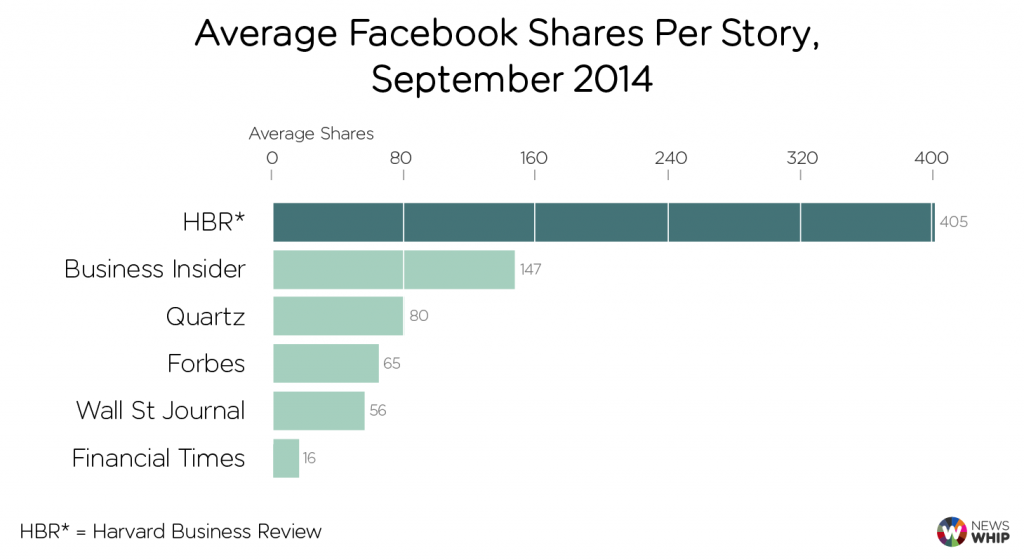
While the site doesn’t publish a huge amount of content every month, average share rates on all platforms, including LinkedIn, are extremely high. That means that each story is getting maximum impact on social media.
While an overall social strategy is a good idea for sites looking to maximise engagement, there are a few easy ways of kickstarting the process.
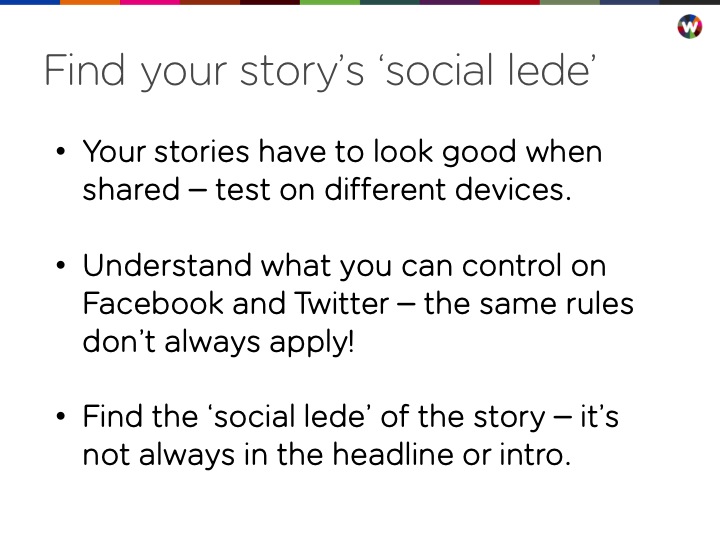
With that in mind, make sure that your stories look good when shared on Facebook and Twitter. We’ve already covered some simple ways of covering that on the blog, but the main principles are;
Just like any good news story opens with a strong lede – the most important piece of information in the story – a ‘social lede’ is needed to jar interest on social media.
If it isn’t a major news story, the social lede often won’t be in the headline, standfirst, or even intro of the story. It might be an interesting statistic or chart from the story, a brilliant or controversial quote form an interviewee, or any other segment not immediately obvious from the link.
Here’s an example to illustrate the point:
What It’s Like to Carry Your Nobel Prize Through Airport Security https://t.co/C90wqOduiH
— SciAm Blogs (@sciamblogs) October 10, 2014
This is the best. When airport security asks a Nobel Prize winner what’s in his carry-on bag: https://t.co/XFVsgB5nWN pic.twitter.com/lqpDZoRitk
— Adrienne LaFrance (@AdrienneLaF) October 12, 2014
The first is a copy-and-paste job, which undersells this quirky and highly shareable story. The second tweet comes with a more conversational tone, and a screenshot of some key dialogue. The difference in retweets and favourites tells us clearly which was the more engaging tweet – and who saw the ‘social lede’ in the story.
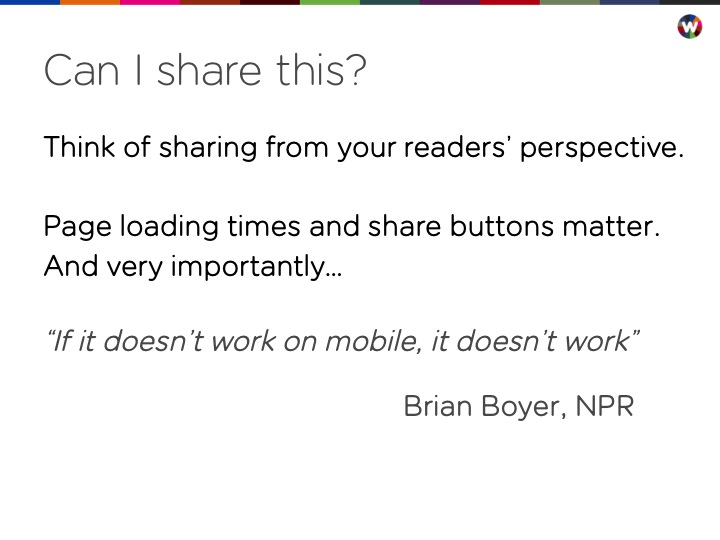
It’s worth putting time into carefully studying the path that readers take from Facebook feed, to site, to share, on different devices. Just as you would ask ‘would I share this?’ at the outset of making content, ask ‘can I share this easily?’ when it comes to what you post on your site.
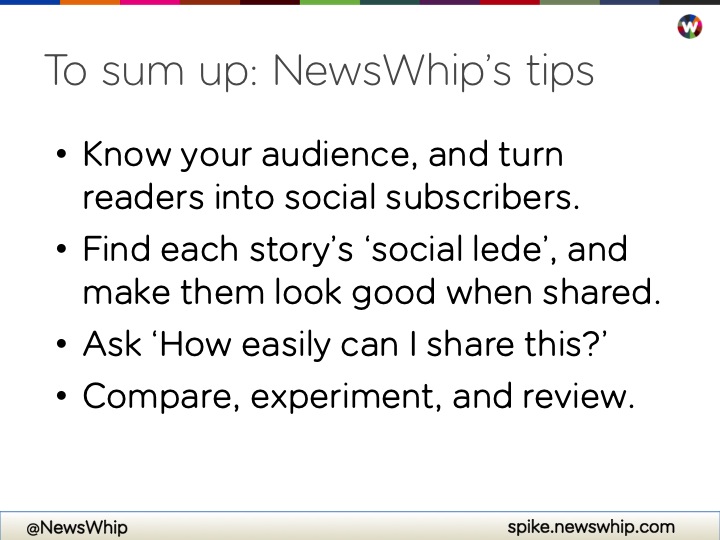
To conclude, here are four main takeaways from the presentation:
For more advice on how to prime your stories for social media, check out parts one and two of our guide to turning readers into subscribers.
What Next?
1) Take a free trial of Spike, to find the stories that matter most to your audience
2) Join our weekly newsletter, read by 8,500 media experts