What do you do with the new subscribers you earn from getting your stories shared, and how to get them to become broadcasters for your content?
In Part One of this guide last week, we looked at getting people to click your links in Facebook and Twitter, and facilitating sharing on your site.
For Part Two, we’re going to look at how to get your new visitors to stick around once they land on your site, encouraging them to subscribe for future posts, and finally, keeping them happy once they are subscribers.
1. Make new visitors stick around: Loading fast, looking good and serving related content
Whether they share immediately or not after clicking through from their timeline, you still have a new reader. Now’s your time to show off. Making sure that everything falls into place on your page properly, having things look nice and serving up some related content goes a long way towards combating the difficulty of getting them interested in your publication beyond the story they just read or watched.
A) Make sure your pages load fast
“If your page takes a few hundred milliseconds longer to load, lots more people are going to leave before it loads. As the world becomes more mobile, that becomes a bigger and bigger issue, ” says Daniel Mintz at Upworthy. On mobile especially, impatient readers won’t wait around for your page to load if it’s noticeably slow. You’ve lost a potential share and subscriber straight away. Simple steps to take to improve page load times include:
- Ensuring your site has no broken links or unnecessary tags.
- Optimise your images for the web by using JPEG compressors. This can reduce the size of your JPEGS by 70%, with no noticeable decrease in quality. You can also saved image ‘for web’ in editing programs.
- Checking your load times regularly.
B) Make a visual impact
Having things look nice on your site is an obvious factor in getting people to enjoy reading and sharing from your site. Sites that have been designed as visual content trails include TIME, the LA Times, Quartz and NBC News. Their approach seems to be working – we’ve recorded all of these sites performing strongly each month on Twitter and Facebook, while TIME’s bounce rate has decreased by 15% since adopting the infinite scroll feature in March. The editor of business site Quartz, which also runs off an infinite scroll design, estimates that readers “view about 50 percent more stories per visit than they would without the option to scroll.”
When a substantial chunk of your traffic is coming via Facebook and Twitter, it nicely addresses the problem of the second click – how exactly to get those visitors to stick around.
C) Suggest other relevant stories
Your homepage is probably no longer the front door to your content. More and more visitors are landing on your stories via the ‘side-door’ of sharing. Given that they might never bother clicking the ‘Home’ button, it’s obvious that your new readers should be served with new, relevant content once they’re finished reading.
Content suggestion can work in two main ways. It can suggest the main stories of the day, or related stories on the one the reader clicked into originally. The option you go for can depend what type of content you publish.
The Guardian lists the 10 most popular stories in a given category beneath each story. As an up-to-the-minute news site, covering the biggest stories of the day, it stands to reason that the related suggestions (ranked by ‘popularity’) would be of interest to visitors who came to read about the day’s news. The suggestions are also customised for different sections – if you click into a story about David Cameron, you’ll be offered the day’s most popular politics stories, while clicking a report on a Premier League match will lead you to the most popular Soccer stories.

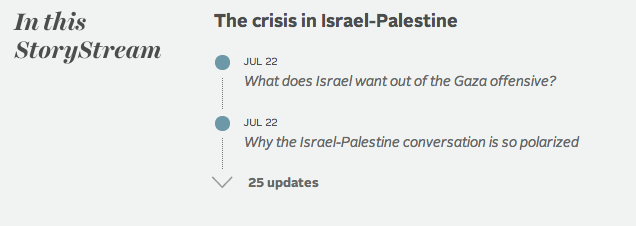
If you’re not posting a constant stream of news, there are other ways of making content suggestion work. Allowing readers to click into stories related to the topic they’re reading about is a method used to great effect by ‘explainer’ sites like Vox.com. Their ‘storystreams’ allow curious readers to quickly find out everything they need to now about a current issue in the news, sorted chronologically.
2. Turn readers into subscribers: Getting readers to like and follow
If everything’s gone to plan so far, a new reader has read and maybe shared a story from your site, and stuck around to click another tantalizing headline or two.
But the internet is a distracting place, and even those with the best of intentions will soon forget you ever existed once they flick back to Facebook or work. The ticket into someone’s Facebook or Twitter feed has substantial long term value, assuming they will continue to click on and share your content. Now is your chance to to remind them to subscribe to your page, buying into their timeline.
Push readers into linking your Facebook page or following you on Twitter hard. Otherwise, the readers that you’ve worked so hard to attract could be lost.
There isn’t a whole pile of data out there to show how effective pushing readers to subscribe is, but we can make some inferences from the data we see every month in our Facebook and Twitter rankings. In June 2014, 7 of the top 10 Facebook publishers included links and directions to their Facebook and Twitter pages on each of their post pages. These sites don’t obtrusively annoy readers into liking or following, rather simply reminding them that they can simply click ‘like’ for future stories. If you don’t ask, you won’t receive.
If you’ve already put in effort in presenting your story attractively on all platforms, a lot of your hard work will be done. It’s a lot easier for the reader to like and follow your profile on the actual network, but allowing them to do so on-site is also a worthwhile feature.
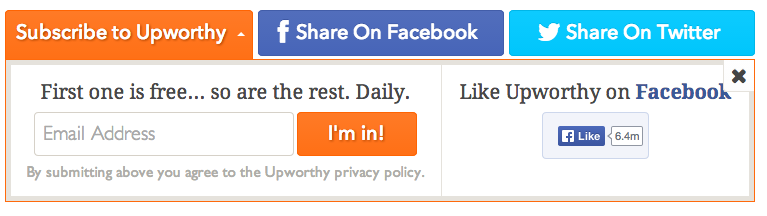
There is no perfect best practice in the field – set a goal of collecting Facebook shares, and start experimenting. Upworthy swear by their Facebook slider, as well as displaying subscription options prominently on each post. BuzzFeed invite you to ‘connect’ with them through icons on the side on each post. Meanwhile, Elite Daily makes a humorous connection with the reader by wryly titling their Facebook like panel ‘Procrastinate Better’.
These new subscribers will become broadcasters for your stories in the future. As long as you keep them interested.
3. Keep them coming back, and stay informed: The long game

Journalists at the Times Leader newspaper in Wilkes Barre, Pa. work in the newsroom,Tuesday May 9, 2006. Wilkes-Barre’s status as the smallest city in the United States with two independent, paid dailies may not last much longer. The Times Leader, published since 1879, has been put up for sale. A potential buyer is the parent company of the Citizens’ Voice, which could shutter it. (AP Photo/ Rick Smith)
Now you’ve won your new subscriber, or increased your odds of doing so, your next challenge is to get them to share your content so you can reach their friends and followers, starting step 1 all over again. Here are some ways of ensuring that your new subscribers will be happy to keep you in their feeds.
A) Figure out how often to post
Optimum posting frequency varies depending on your output. Posting the same stories over and over on Facebook won’t work the same way like it does on Twitter, but neglecting to post at all means that the EdgeRank algorithm’s freshness detector might reduce your reach when you post again. Remember that an algorithm will dictate how many people will potentially see your post, giving preference to fresh, high quality content. According to recent Facebook guidelines, you should avoid asking readers to ‘like, comment, or share’, and cliched calls to action when posting your links. Analysis from Social Bakers showed that the average post frequency for brands was 1 link per day, while media companies have much more scope, posting an average of 7 times daily.
On Twitter, linking out up to 30 times a day can work fine, provided you’re still seeing engagements. Use a free tool like Bit.ly to check how often your links have been clicked, and note your follower count in a spreadsheet every few days. If it’s going down, you’re probably not posting properly.
B) Frame your stories for maximum reaction
If you’re publishing a lot of content daily, posting every single URL on your Facebook page isn’t the best idea. Instead, cherry-pick the stories that will have resonance online, and put effort into framing them with their emotional heart facing out.
Mail Online Social Media Editor Taylor Lorenz says that her approach is to share those stories she thinks will do well on social in a Google Doc with the rest of her social media team each morning. The stories are then drip-fed to readers throughout the day.
Smaller publishers and bloggers can’t afford not to have everything they post go down well, so understanding what your audience is interesting in reading about, right now, is very important. Tools like Spike help writers and editors make informed decisions about what’s worth talking about today.
When reviewing the social performance of different stories, expecting every story to go mega-viral is a deeply unrealistic aim. Instead of devoting lots of time to prepping individual pieces for viral stardom that might never emerge, it’s probably better to use that time to set up a strategy that ensures that every story you publish will end up underneath the most eyeballs possible.
Instead, stories can be highly socially successful within certain niches. Consider the example of this Verge article from earlier this year on the metrics of sharing. It attracted over 4,000 tweets, 6,000 Facebook interactions and even managed to hit over 1,000 Google+ shares. It showed that thought-provoking stories can reach the audience you’re aiming to hit, in this case digital media watchers, even if it doesn’t make the front page of Reddit. Similarly, slow burning intelligent marketing and “how to” guides go viral slowly. These posts attract huge volumes of shares, tweets and comments every day, but you won’t spot them on every timeline.
C) Listen to your readers
Once you post stores to your page, don’t ignore your readers. Comments act as a way of letting friends-of-fans see your post, so encouraging discussion pays off. Fostering a successful social community involves listening to feedback from readers, allowing discussion and staying relevant. The easiest way of doing this is by ensuring that your content is exciting and of high quality, but including calls to action, asking questions, running occasional competitions can also help up your comment quotient.
D) Watch how others are doing it
For sites posting news to Facebook and Twitter, it doesn’t hurt to keep an eye on how others are framing a story for major social impact.
At USA Today, news editor Holly Moore says her team are constantly watching how competitors are presenting breaking stories online.
They use social media tools (like our own Spike) to educate their newsroom, allowing them to better understand how to make sure their stories have maximum impact on Facebook and Twitter.
Holly says that the USA Today team are particularly interested in how watching how others are doing on social.
“What are they pulling out of a story that we’re not? Did we lead with our guns? We’d like to see USA Today on top more whenever possible.”
With these five steps, you should be growing a loyal subscriber base, seeing more shares of your stories, more engagement with your content, more traffic and brand recognition. It’s a cycle that keeps giving.
To recap, here are our five steps to turning a share into a loyal subscriber:
1. Treat Facebook and Twitter like your front page – make sure your stories are well presented.
2. Optimise for sharing on your site by making sure that your share buttons are functional, and thinking about your mobile visitors.
3. Encourage new readers to stick around by making sure your pages load fast and look good. Find smart ways of serving related stories to encourage engagement beyond the first click.
4. Turn your new readers into subscribers by getting them to like and follow your page.
5. Keep them coming back by covering stories for a social audience, listening to your readers, and watching how others are doing it.
What have we overlooked? We’d love to hear your feedback. Let us know in the comments below, or on Twitter.
To find stories that are perfect for your audience right now, sign up for Spike today. Used by some of the world’s most successful social newsrooms, Spike is the perfect tool for finding the big stories, while they’re still small.