Where do you get your news in 2025?

Websites?


Emails?
Socials?

Chances are that you, or at least someone you know, are one of the
%

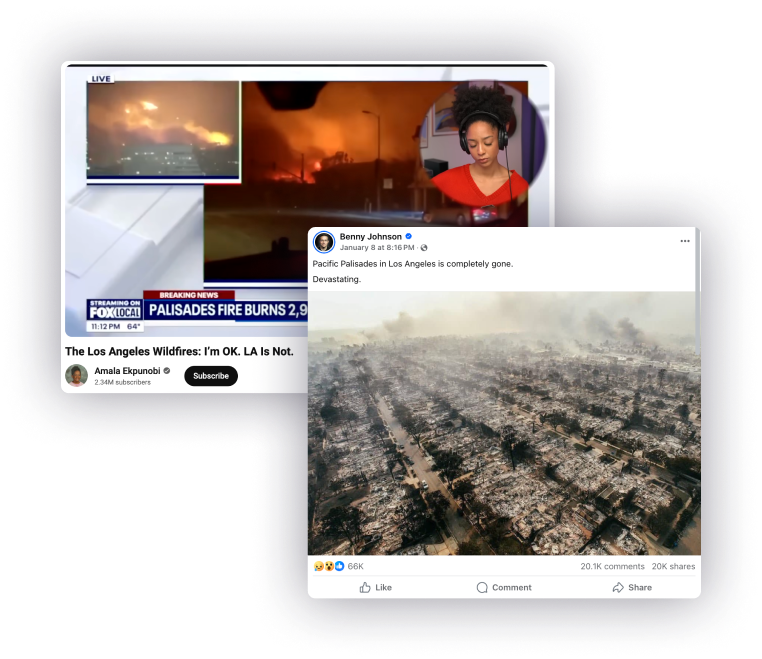
But there’s also a rising trend of new ‘news creators’ proliferating across various platforms.
Let's dig in.

1.
Pew Research highlights news creators
2.
Building audiences with TikTok
3.
Going long on YouTube
4.
The Instagram difference
5.
Finding niches
6.
The mainstream version
7.
Key takeaways

Pew Research
Pew Research recently published a report on some of the biggest news creators, highlighting the kind of content they are putting out. It contains a mix of former politicians turned commentators, podcast hosts, YouTube stars, and more, showcasing the wide variety of news creators that are emerging in the ecosystem.
It might not be an exhaustive list, but it shines a light on this emerging content format, as well as where that content gets engagement. So we took this list as a starting point to see the different platforms where they’re seeing success.
Cross-platform creators
It’s not an apples to apples comparison because the study looks at different groups of creators for each platform, but what the chart opposite does show is that there is still engagement to be found on all of the major platforms, and niches can be created anywhere.








For this report, we’re going to focus on three of the more visual platforms of TikTok, YouTube, and Instagram, pull out some of the top creators on those platforms in terms of engagement and showcase the different types of content and styles of presentation that perform well on each. We’ll also highlight some of the things that news organizations can learn from these creators, who are often innovating new formats and best practices to reach their audiences.

Building an audience on TikTok
The emergence of news creators at scale has coincided with the rise of TikTok as a distribution platform in the US, and that’s likely not a coincidence.
It’s a visual medium, and allows users to stitch together other videos and screenshots easily for added context or to easily provide background information on the topic at hand.
Dylan Page: News Daddy
Dylan Page is one of the biggest news creators on TikTok, thanks to his combination of news analysis, creative use of the platform’s features, and wit. He doesn’t use the name in his screen name any more, but he rose to prominence with the nickname News Daddy.
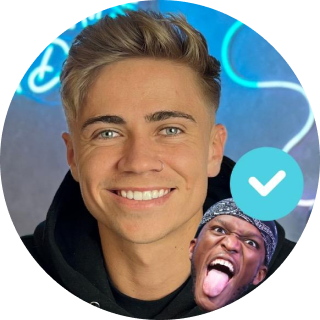
Dylan Page
@dylan.pageWhich one do you think is the craziest? 🤔😳 ♬ original sound - Dylan Page
His ability to break down trending topics with speed, clarity, and a bit of humor resonates strongly with younger audiences on TikTok. In the one-month period we analyzed, Page earned over 25.7 million engagements with his videos, highlighting the massive reach and influence that news creators can achieve on the platform.
@dylan.page
Rough and ready takes from Pearlmania500

Pearlmania on Matt Gaetz
@pearlmania500 Drake level accusations. #hiphop #senate #beef #banking #vanlife #kendricklamar #lawyer #pearlmania500 #studentloans ♬ A MINORRRR - heavyleansippa
@pearlmania500
Jamelle Bouie, New York Times
Bouie is a full-time opinion columnist for the New York Times, but he uses TikTok to share thoughtful, informed commentary that often stems from his written work, but also goes beyond it.
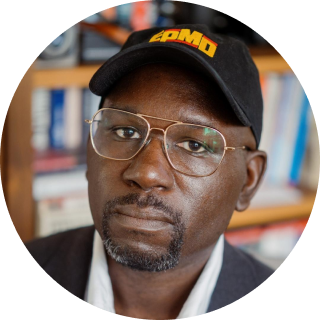
Jamelle Bouie
@jamellebouieneed i remind everyone that trump was NOT GOOD at being president in his last term, NOT GOOD at managing a legislative agenda and NOT GOOD at negotiating. we are now, once again, seeing what that looks like. ♬ original sound - b-boy bouiebaisse
Bouie’s credibility as an established journalist, alongside his deep subject matter expertise on US history and politics have allowed him to accumulate followers who are already engaged with his content via his writing, but also with younger audiences who appreciate his approach and ability to expand his influence on emerging platforms.
One self-acknowledged irony of Bouie’s TikTok presence is that some of his audience does not even know he writes for the Times. He’s built a presence on the app as a figure of authority talking about the news, and that’s enough for many to keep paying attention.
@jamellebouie
TikTok news creators come at the project from many different angles, including everything from seasoned journalists to quick takes from less polished commentators, but what is clear is the reach of these platforms, particularly in finding new audiences. Many of these videos have seen tens of thousands of engagements — sometimes rising to the millions — so there’s an obvious motivation for TikTok to be a key pillar in any audience development strategy.

Going long on YouTube
If more traditional influencers have taught news creators anything, it’s that a single-platform existence can be a precarious one, especially if content creation is to function as a source of revenue.
So, while TikTok is a behemoth when it comes to discovery and audience building, the ultimate goal is often to drive conversions and subscriptions, and that frequently leads back to YouTube.
Joe Rogan sets the tone
There are arguments about what constitutes a “news creator”. Some might contend that Rogan shouldn’t be included in this category, but as the most mainstream popularizer of the podcast format on YouTube it’s hard to leave him out.
Joe Rogan
His format of long, free-form discussions generated upward of 20 million views for the month we looked at on YouTube alone, and his guests this year ranged from high-profile politicians, to comedian friends, to people he just finds interesting.
@joerogan
One notable fact about news creators is that creating in this way allows for more explicit partisanship than mainstream news. Conservative commentator Benny Johnson and the left-leaning Hasan Piker exemplify this by using YouTube to deliver content that aligns with their political viewpoints.
Though the partisan nature of their work is similar, their approaches are actually quite different.
Johnson responds to political and social issues in shorter videos, often barely reaching a minute in length, while occasionally adding in a satirical sketch.
@bennyjohnson
Benny Johnson
Hasan Piker
Piker, on the other hand, often dives into deeper discussions with sometimes hour-long live streams that critique policies and current events.
@hasandpiker
Both creators regularly rack up hundreds of thousands of views. YouTube tends to be more search-driven than other platforms news creators use, so this shows the value in being able to bring an audience from other platforms onto YouTube, where there are often huge archives of content.
Black Conservative
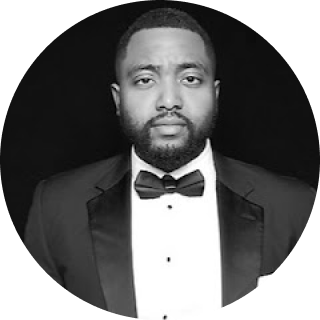
Black Conservative
The account does exactly what its name suggests — produces videos on issues such as race, culture, and politics from a black conservative viewpoint, which is often seen as underrepresented in mainstream media coverage.
@gforemanBCP

The Instagram difference
Instagram is notable because some creators still clearly use it for more personal photos and life moments. Beyond the creator ecosystem, Instagram has become a mainstream news distribution platform, though, and some are clearly following that lead.
Charlie Kirk’s political takes
One of the strongest examples of this is Charlie Kirk. As a prominent conservative commentator, and founder of Turning Point USA, a non-profit that advocates for conservative politics among young people, Kirk leverages Instagram to share bite-sized videos, breaking news updates, and repurposes content from his other social accounts, predominantly X.
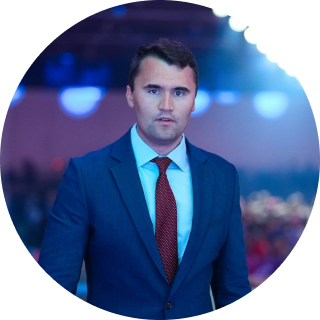
Charlie Kirk
View this post on Instagram
With four million followers, Kirk regularly receives hundreds of thousands of engagements with his content. While often controversial, his content is clearly tailored to a specific audience and successfully fosters debate and discussion on a variety of political topics.
@charliekirk1776
David Pakman brings podcasting to Instagram
David Pakman is an independent news creator that utilizes Instagram for short-form video content, primarily clips of his own podcast or appearances on other shows.

David Pakman
View this post on Instagram
Beyond news, Pakman is one creator that also highlights personal milestones, such as being invited to the White House in December off the back of his work.
This invitation not only underscores once again the increased recognition of independent creators in news consumption, but also the dual role that a platform such as Instagram can play in both breaking news and personal promotion.
@david.pakman
Mo News adds a news veteran’s touch

Mo News
View this post on Instagram
This social-first news approach showcases how seasoned professionals are adapting to the new digital news space by meeting their audiences where they are with customized content. This was a successful enough approach that the Mo News Instagram feed generated almost half a million engagements in the month we analyzed for this research.
@mosheh

Finding niches
Much of the content we have highlighted has been about politics. It’s one of the most engaging topics, so it makes sense, but there are also niches to be filled.
Whether that’s content in different languages, or specific verticals being reported on, there’s always someone there to make content for it.
Carlos Eduardo Espina fills a Spanish-language niche

Carlos Eduardo Espina
@carlos_eduardo_espinaQue Dios bendiga a este señor 🙏❤️ ♬ original sound - Carlos_Eduardo_Espina
He’s established himself as a trusted voice for the Spanish-speaking community, which is reflected in his social media engagement, and through his role as a speaker at the Democratic National Convention last year.
His account actually has more engagements in the month we looked at than any other TikTok news creator, with his 28 million eclipsing even the huge engagement Dylan Page saw.
@carlos_eduardo_espina
Tech content resonates across platforms
Technology is also a big area of interest for news creators, and it’s not limited to a single platform. Taylor Lorenz was until recently a reporter for The Washington Post, but has recently launched her own newsletter User Mag as well as still hosting the Power User podcast.

Taylor Lorenz
@taylorlorenz I feel like this kid should never have to do homework again?! Also it does math! #tech #technology #ai #creator #creatoreconomy #success #artificialintelligence #siliconvalley #contentcreator #innovation #influencer ♬ Dance You Outta My Head - Cat Janice
This one-two punch is a common path for newly independent creators, especially when they have an audience familiar with their work already. This pivot is supported by her presence on social media, with her TikTok of particular note.
@taylorlorenz
@mkbhd
Marques Brownlee

The mainstream goes social-first
News creators are often at the leading edge of how news gets consumed. They have fewer restrictions on experimenting with new formats, video lengths, and platforms, meaning they can pivot quicker than large news organizations.
That’s not to say that these publishers aren’t taking advantage of these opportunities too, though. As we noted in our recent news publisher report, a majority of the engagement from big publishers is now coming from Instagram and TikTok, rather than web links.
Daily Mail
@dailymail When asked about a potential TikTok ban, Trump said he’ll ‘take a look’ at the issue, because he ‘has a warm spot in his heart’ for TikTok. 🎥 Reuters #news #trump #politics #republican #tiktokban ♬ original sound - Daily Mail
Financial Times
View this post on Instagram
There are clues as to where news creators may influence the future of mainstream news. The Washington Post recently got rid of the majority of its PR team, and will focus more on personality-driven promotion. We may see news organizations doubling down on journalist-driven engagement with news, relying on some level of public knowledge of who its journalists are, and cultivating a community around them in the same way news creators now do.
Whatever ends up being their influence on the mainstream, news creators are here to stay, and if you’re not following them you’re missing a huge part of what’s being reported. At the moment, they’re still quite reliant on mainstream news as a source, but that may change as more organizations cultivate and develop their own internal versions of news creators.
Key takeaways for 2025