Changes in media consumption and distribution have big consequences for those who tell stories – whether it’s news reporting or brand promoting. The relevant professions should learn from each other’s activities.
Journalists learning from marketers: do your (market) research
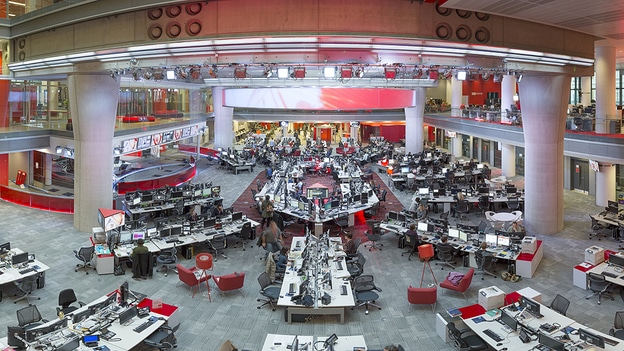
Earlier today, BBC News Director James Harding addressed the newsroom to outline his vision of its future.
He spoke at length about new formats of storytelling and reporting that the BBC will be incorporating into their everyday reporting, and the continued importance of upholding editorial standards.
Harding also addressed an interesting point about the actual distribution process of the BBC’s content – the fact that the journalists’ audience is more connected and engaged than ever.
“…We need to have a far more open culture, where we surface much more third party and social content alongside our own journalism. When we talk about ‘our stories’, I hope that will mean not just the work of the 8,000 people who work for the BBC, but the information and ideas of the 300 million people who use it,” said Harding.
This highlights an area of increasingly important overlap between journalism and marketing – awareness of what the end user wants to read.
Traditionally, journalists packaged up news within the editorial vision of the newspaper or broadcast outlet where they worked, and submitted it to their editor to transmit to the printers. News was a product that was packaged up and distributed without much involvement from those who made it.
Today, journalists are intimately involved in the promotion and distribution of their own work. Real time analytics platforms show the performance of their content, and they can be benchmarked based on the level of reads and engagements with their work. Journalists can promote their own work to followers on Facebook, Twitter and other social networks.
It’s time for many journalists to take a leaf from marketers’ books and research their audiences. Who exactly is reading their stories? Why? What’s the personae of a reader of the lifestyle section of The Guardian? Or the politics section of CNN? Who will be interested in those stories and why?
Building personae and focusing on audiences are traditionally activities left to marketers who are zeroing in on how to reach the “market” (i.e. buyers) for a product they want to sell. But in today’s digital media structure, we have direct, instant distribution, and the increasingly direct instantaneous relationship between content-makers and the “people formerly known as the audience”.
That doesn’t mean publishing rivers of socially-optimized Upworthy or BuzzFeed style listicles and inspirational stories. Not everyone likes that sort of content. In fact, most people don’t (we’ll have more information about this on the blog soon). So what tweaks your audience’s interest? Obsession with China’s growth? Discoveries of new marine life? Scarlett Johannson pictures? It’s a worthwhile experiment to visualize and analyze your audience, instead of just writing to please your editor.
Marketers learning from journalists: tell bullshit-free stories
Meanwhile, marketers are leaning hard into the glorious world of content marketing. This involves a brand showing interest in, and telling stories about, something other than themselves and their product. Dove tells stories about women’s health and body issues. Pepsi tells stories about music. Instead of buying 30 seconds of “interruption selling” brands now engage directly with their own audience on Facebook and Twitter, talking about something other than themselves.
This is hard work. Marketing has traditionally focused on getting attention and selling. The end goal is not telling stories people will enjoy and engage with. In one-way interruption marketing, a message can be polished and complete – a vision of sexy models, wealth, admiring children, and even legacies. (I’m thinking luxury brands here – perfumes, clothes, watches.) What long form storytelling can Rolex do exactly? It’s an expensive watch company.
Good journalists have the answers on engagement. They spot the interesting angles in stories. They build stories with attention-grabbing ledes or narrative structures that draw in the reader. They have learned how to write headlines that click. Above all, they’re used to writing about things in a way that makes the story about the story, not about themselves. They can authentically get the hell out of the way of what they’re reporting on.
In the real-time, reactive web, authenticity wins. Authenticity can be different from truth – it can involve style or emotion. But it must be genuine. And you have to be careful how you bake in selling your product with the message.
Marketers are increasingly learning from – and even hiring – their journalistic brethern for their genuine voice and credibility. Journalists instinctively get out of the way of the story and bring it back to the subject. And they do so without too much sneaky promotion.
The end of the world?
So is it the end of the world if journalists are learning from marketers and vice versa? Of course it is. The world of media as we know it is ending. Newsrooms are no longer brains with distribution – they’re nodes: processing, curating, distributing. They’re part of the fabric of the digitalized human discourse. And consumer brands now are too. It’s going to be interesting watching the new world emerge from the old.
To discover what’s engaging the world right now, try out our world-leading Spike platform for free today.