Welcome back to the NewsWhip Publisher Pulse. I’m Chris Miles, a former member of the CrowdTangle and Meta news team, now helping NewsWhip build resources and outreach to news professionals like you.
Last Wednesday, NewsWhip held its Publisher Summit in New York City, bringing together 100+ journalists, editors and social media specialists to discuss, among other things, the state of and future of audience development. Companies including the New York Times, Wall Street Journal, the Associated Press, Axios, Reddit, LinkedIn, Fast Company and The Hill — and others — all dropped knowledge.
Couldn’t make it? We’ve got you covered with extensive notes on the event below.
The biggest takeaway for me was this graph from NewsWhip CEO Paul Quigley during his kickoff presentation, which comes from a 2024 Ofcom report:
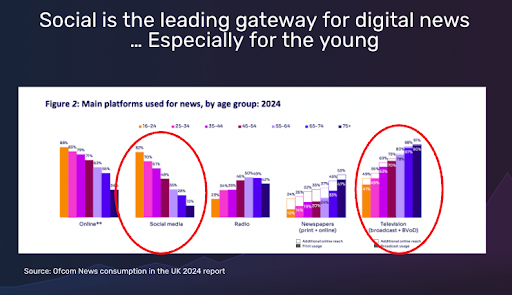
Social media is THE front page when it comes to news for young people. Of course there’s a lot to unpack there, good and bad, and the trend is probably duhto anyone reading this newsletter.
But when it comes to understanding the State of the Union for social media audience development, this graph is it — social platforms are entrenched in our daily lives, and a vast majority of people, especially the youngest generations, get their information directly from social media. The lasting implications of this trend are both obvious and industry-defining — video content is what breaks through, creators are the most influential voices, and algorithms determine the rules of what formats and information go viral.
Most of the Summit participants discussed what this all means when it comes to publishing news and building news-centered audiences. We’ve broken each session out in the notes for you later in this newsletter.
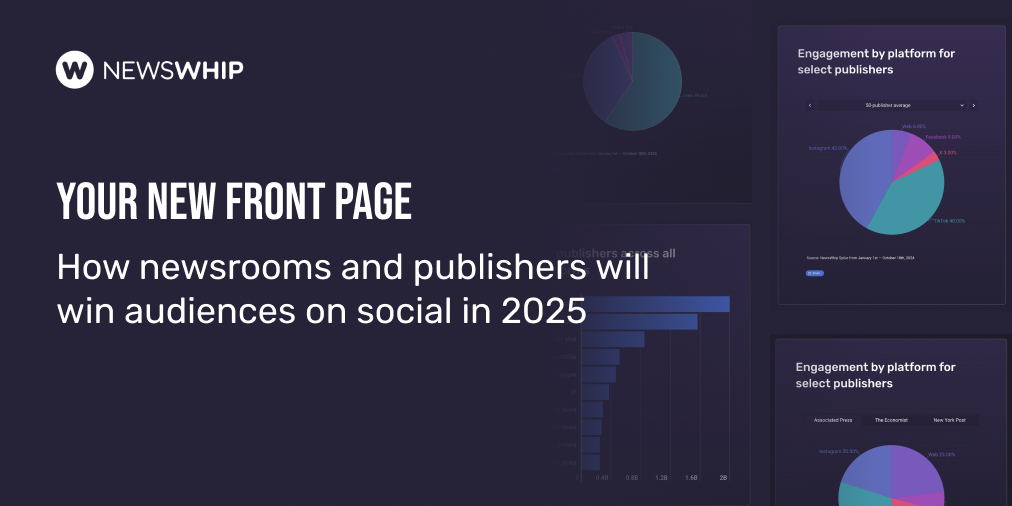
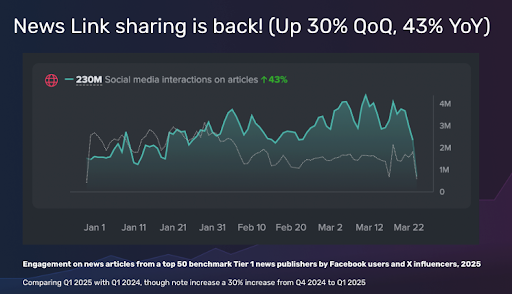
Oh, and the second most interesting graph from the day? This one from NewsWhip, showing link sharing is back up in the first part of 2025 among a control group of 50 publishers. That’s good news for the publishing business!
Anyway, onto those session notes that we promised. (And deeper below that, we have some new resources for news publishers hoping to go deeper on NewsWhip)
NewsWhip’s Publisher Summit: Notes, Quotes and Takeaways
1. ✨ Social media and audience building in 2025
Feat:
- Sophie Rosenbaum (The Associated Press)
- Jake Grovum (The New York Times)
- Neal Rothschild (Axios)
- Moderator: Chris Miles
The era of chasing a “killer app” for audience growth is over — newsrooms are getting strategic.
In this panel, industry leaders from AP, Axios, and the New York Times explored how social media is evolving in 2025 and what it means for publishers. With traffic declining and platforms unpredictable, publishers are shifting focus from raw reach to impact, refining what they do best rather than chasing every new trend.
Measuring success is changing, too — AP prioritizes loyalty metrics like newsletter signups over engagement rates, while NYT emphasizes audience return. As trust in traditional media erodes and podcasters gain influence, newsrooms must rethink how they connect with audiences. Some predict a homepage comeback, while others see continued fragmentation. The only certainty? Experimentation is key, and there’s no one-size-fits-all strategy anymore.
Key quote(s):
“Anyone who says they know [which platforms to bet on] is bluffing.” – Sophie Rosenbaum
“Traffic will never be what it once was. Where can we most disproportionately make an impact?” – Neal Rothschild
“Resources are tighter, forcing us to think critically about what they want to do specifically. The times of everything are over.” – Jake Grovum
Key takeaway: The future of audience development isn’t about being everywhere — it’s about being intentional, adaptable, and building direct audience relationships that last.
2. 👽 Reddit Masterclass
Feat.
- Gabriel Sands (Reddit)
Reddit isn’t just another social platform — it’s the internet’s underground engine for content.
In this lightning talk, Gabriel Sands broke down why Reddit is a goldmine for journalists, but also why it’s tough to crack. Unlike influencer-driven platforms, Reddit thrives on authenticity, making it a challenge for news brands to engage without feeling out of place. The biggest misstep? Diving straight into niche communities without earning trust. Instead, top-of-the-funnel engagement is key. Local newsrooms should take note — Reddit’s decentralized nature makes it a powerful tool for community-driven journalism. But the big question remains: How can publishers “add to the conversation” without getting flagged? The answer, as always, depends on credibility at the account level.
Key takeaway: Reddit is a high-reward but high-barrier platform—news brands that play it right can tap into deeply engaged local audiences, but trust is everything.
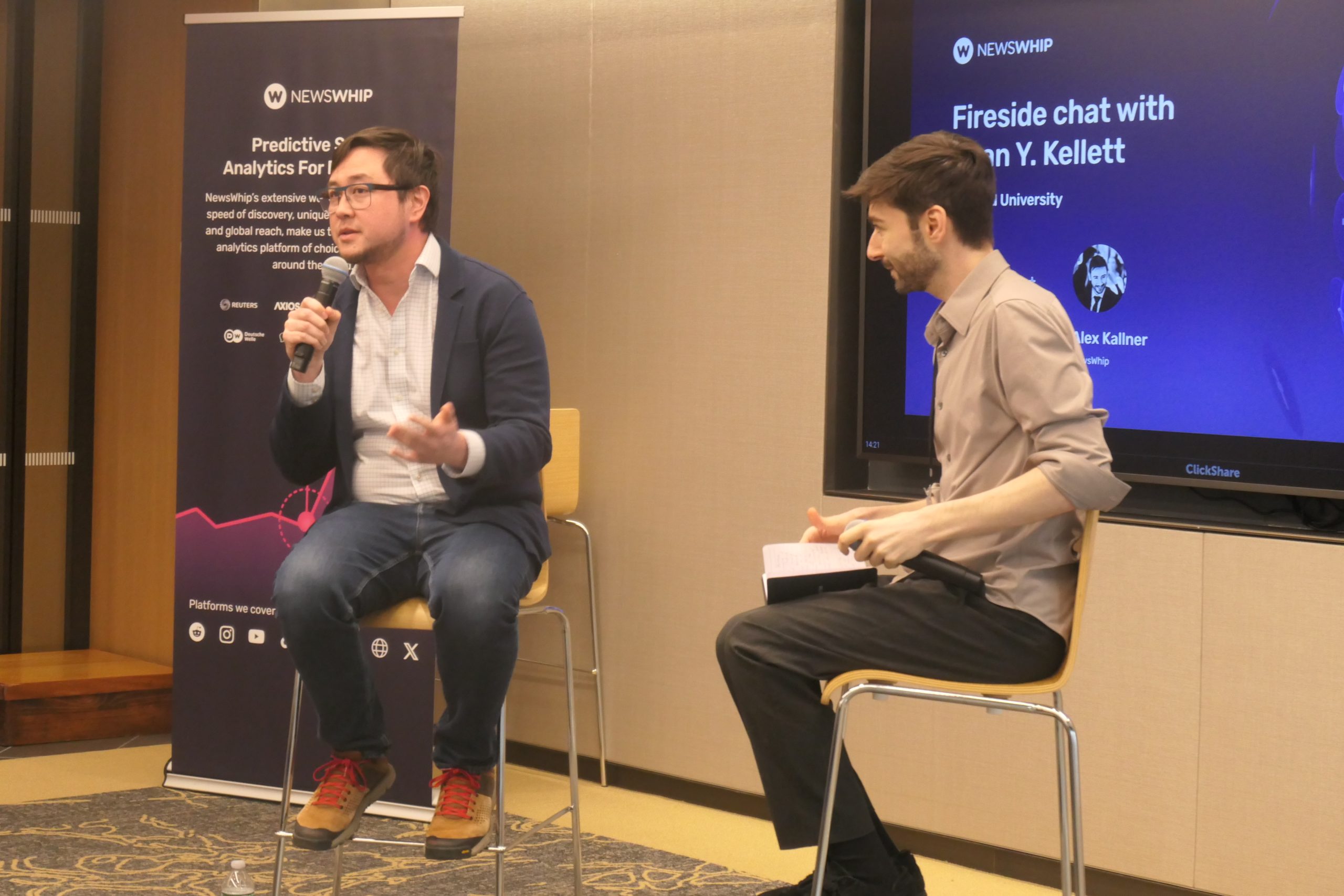
3. 🧍“Going Solo” – Fireside chat with Ryan Y. Kellett
Feat.
- Ryan Kellett
- Host: Alex Kallner
The rise of the “news-fluencer” is here — so how do journalists build a personal brand without clashing with their newsroom?
In this fireside chat, Nieman-Berkman Fellow Ryan Kellett shared insights from his workshop on solo creators, where journalists wrestled with the tension between personal audience growth and institutional loyalty. The key? Choosing a business model — whether through newsletters, subscriptions, or sponsorships — and actively guiding audiences with clear CTAs, something most traditional newsrooms still hesitate to do. Publishers, Kellett argued, won’t naturally prioritize creators, so journalists need to map their own ecosystem and forge strategic collaborations. The shift is already happening: the best newsrooms are integrating audience development across teams, moving routine tasks to reporters and editors so audience specialists can tackle more complex strategies. With consumer support increasingly tied to direct engagement, journalists can no longer afford to sit on the sidelines.
Key quote: “Traditional newsrooms are not telling audiences what they want them to do. That’s the power that creators have.”
Key takeaway: Journalists are late to the creator game—but those who learn to own their audience and engage strategically will have the advantage.
4. 🧐 Social for news gathering: From sourcing to success
Feat.
- Julia Munslow (The Wall Street Journal)
- Patrick Boehler (Gazzetta)
- Maia McCann (Fast Company)
- Moderator: Sara Katritos (NewsWhip)
In a world where trends explode and vanish in seconds, how can newsrooms separate the signal from the noise?
Here, speakers tackled the evolving landscape of social newsgathering, where AI-powered search is making it easier to spot trends. But shifting platform dynamics — like the rise of private messaging apps and an overwhelming flood of video — are making it harder to track conversations. Journalists must now ask: Is a viral moment just social media hype, or does it reflect real-world impact? The WSJ, for example, examined a viral cottage cheese trend and found that sales data confirmed its broader significance.
The challenge of speed vs. accuracy is growing, with misinformation becoming harder to catch as platforms tighten access to fact-checking tools. As for storytelling, the format matters — WSJ leans into first-person videos to build trust, while Fast Company relies on tools like NewsWhip to gauge brand impact from viral moments. Ultimately, successful newsgathering in 2025 requires a mix of sharp editorial instincts, smarter tools, and a newsroom culture open to discovering stories where the audience already is.
Key quote:
“It’s about looking at the trends and understanding if a trend is actually happening outside of social and in real life.” – Julia Munslow
“Organizations need to have tools that allow them to go beyond the algorithm that users see.” – Patrick Boehler
Key takeaway: Social newsgathering isn’t just about spotting trends—it’s about verifying them, understanding their real-world impact, and meeting audiences with the right format at the right time.
5. 👷 What publishers can learn from news creators
Feat.
- Ryan Broderick (Garbage Day)
- Mosheh Oinounou (Mo News)
- Sarakshi Rai (The Hill)
- Moderator: Benedict Nicholson (NewsWhip)
The rise of independent news creators is reshaping journalism, challenging traditional media’s role as the primary source of information.
In this panel, industry leaders explored what makes a news creator, how they build trust, and what publishers can learn from them. Unlike influencers of the past, today’s news creators are defined by their ability to engage audiences across formats — whether through video, newsletters, or social media. Trust is no longer built through institutional authority but through transparency, personality, and direct audience engagement.
While some legacy outlets struggle to integrate creators, others, like The Hill, are leveraging their reporters as social-first personalities. The challenge for publishers? Creators thrive on independence, and many see little incentive to stay within traditional newsrooms. Some suggest a new model—one where creators own their content while publishers provide resources, distribution, and financial stability.
Key quote(s): “One of my best tips with social media is using the platforms to both push out content and using it to listento the audience. On Instagram, for example, I have the ability to answer the questions people are asking, and that helps me understand my audience’s needs and interests.” – Mosheh Oinounou
Key takeaway: The future of news is personal. Audiences increasingly turn to individuals over institutions, and publishers must rethink their role—not just as news organizations, but as platforms that empower the next generation of trusted voices.
6. 💼 LinkedIn Masterclass
Feat.
- Joseph Milord
LinkedIn is becoming an increasingly powerful platform for journalists, offering amplification through editorial curation and algorithmic boosts.
In this session, Joseph Milord shared insights on how newsrooms and reporters can maximize their reach. With 600 million members worldwide, LinkedIn’s news team actively highlights trending stories through a combination of managed support, daily communication, and targeted distribution. Journalists can submit story pitches via an Airtable process, giving LinkedIn editors direct access to their reporting. Key content areas include workplace trends, economic shifts, and industry leadership news. A major shift for 2025? Video. LinkedIn’s new video tab is driving a 33% year-over-year increase in consumption, with vertical videos under two minutes performing best. Content that thrives includes career development tips, industry news breakdowns, and journalists previewing their own reporting. Unlike other social platforms, LinkedIn does not require paid partnerships for distribution — journalists and publishers can submit content directly.
Key quote: “Through trending news stories, LinkedIn can amplify journalists.”
Key takeaway: LinkedIn isn’t just for networking — it’s an emerging news ecosystem. Journalists who engage with the platform strategically, especially through short-form video, can significantly expand their reach.
7.🏛️ Keynote – Rewriting the Narrative: AI, Influence & the Future of Content
Feat.
- Katie Harbath (Anchor Change)
The media landscape is evolving fast, driven by AI, influencers, and shifting political dynamics. In this keynote, Katie Harbath explored how the rise of decentralized voices, algorithm-driven platforms, and AI-driven content are reshaping public discourse and news consumption. As we head into 2025, concerns about AI fueling disinformation continue to grow, especially with its increasing role in political campaigns and advocacy. The challenge for news consumers is navigating an overwhelming influx of content while remaining intentional about their sources.
As the media ecosystem grows more complex, it’s becoming harder to sift through the noise and find reliable information. Yet, there’s opportunity within this chaos. Platforms and content formats are diversifying, and creators must adapt by experimenting and embracing new approaches. AI tools are becoming integral to content creation, but understanding how to use them effectively will be crucial for anyone looking to thrive in the coming years.
Key quote: “There is opportunity in chaos … to show others that doing things differently is OK.”
Key takeaway: Navigating the future of content creation requires adaptability, a keen understanding of AI tools, and the courage to experiment in an ever-evolving media environment.
🚨 BIG NEWS for journalists & news publishers! NewsWhip Launches a New Journalist Resource Center

NewsWhip has launched a new Resource Center — a one-stop shop for the latest media trends, real-time analytics tips, and expert insights to help news publishers stay ahead of the news cycle. You can find it here.
🔎 Need to track a breaking story before it goes viral? The Resource Center offers tips from content discovery to audience strategy to competitor analyses
📈 Want to understand other publishers’ strategies? Customer stories from Axios, Conde Nast, NewsGuard, Reach and more
🛠 Demos, webinars and how-tos? Say no more.
That’s all for us at the moment. If you’re looking to dig deeper, remember we posted a playbook (with fun charts) on how to make more revenue from social media.
Got tips or want to see us dive into anything in particular? Just DM! We’re eager to explore.