Experts from the Huffington Post, Flipboard and MIT Tech Review discuss the future of media at Web Summit 2014.
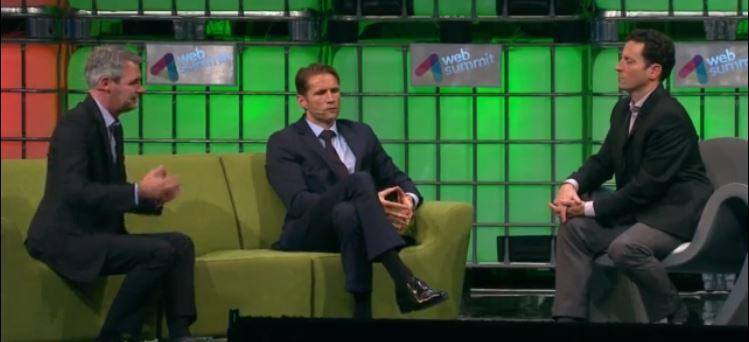
L-R: Mike McCue (Flipboard), Jimmy Maymann (The Huffington Post), Brian Bergstein (MIT Tech Review)
NewsWhip are at the Web Summit in Dublin this week. We’ll be posting reports from media panels and experts on our blog over the coming days.
Mobile, native advertising, and the future of independent media startups were some of the big topics on the table at today’s ‘Future of Media’ panel on the Web Summit’s centre stage.
Taking to the stage were Mike McCue, Co-Founder of Flipboard, Huffington Post CEO Jimmy Maymann, and Brian Bergstein of the MIT Tech Review.
The panel opened with a discussion on the role of mobile in reaching new audiences.
“The shift to mobile is as big as from print to desktop,” said Jimmy Maymann. “We can’t just say ‘if it works on desktop, it works on mobile.’”
He explained how the Huffington Post treats the stories it serves to mobile readers differently to desktop, by identifying from the start how the story is going to be consumed.
It was a sentiment supported by Flipboard’s Mike McCue, who said that mobile is helping people link directly to other people, rather than webpages linking to webpages. “Content is being atomized and spread through the social web,” he said.
“The way that you think about content tends to map onto how it’s presented,” he explained, pointing to the example of print reporters writing to fit ‘holes’ in their daily paper.
Moving onto the question of making money from journalism, Brian Bergstein pressed Jimmy Maymann on the Huffington Post’s approach to native advertising.
Maymann revealed that sponsored content has gone from 0% to 30% of the Huffington Post’s revenue in the last two years, and the company is aiming for 50% overall in the next two years.
“Brands need to realise it’s not just about banner ads…it’s about the conversation, and content is a great way of doing that,” he said.
“Sometimes you buy scale and reach, other times you are buying a niche audience” @maymann #websummit 2/2
— Abigail Edge (@abigailedge) November 4, 2014
He added that native advertising is still a viable option for smaller news startups looking to attract paying advertisers.
On the question of financial viability for smaller media outlets, Mike McCue said that it’s never been easier to reach a large audience of niche readers very quickly, and that offers huge potential for news sites.
“The future has never been brighter for high quality content creators,” he concluded.
Web Summit Day Two: “The Internet Is The Publication”
What Next?
1) Take a free trial of Spike, to find stories ahead of your competition
2) Join our weekly newsletter, read by 8,500 media experts