
What can we learn from the most engaged brand audiences on Instagram? We take a look at nine things to know.
Recently, we looked at Facebook and Instagram to find which publishers have built out the most loyal and engaged followings. Given that brands are also trying to reach their audiences through content, we wanted to look at which brands have done the same.
The answers weren’t what we expected.
Discounting the sports franchises, which are in a league of their own, the brands with the most actively engaging followers were primarily clothing and beauty brands, many not particularly well known.
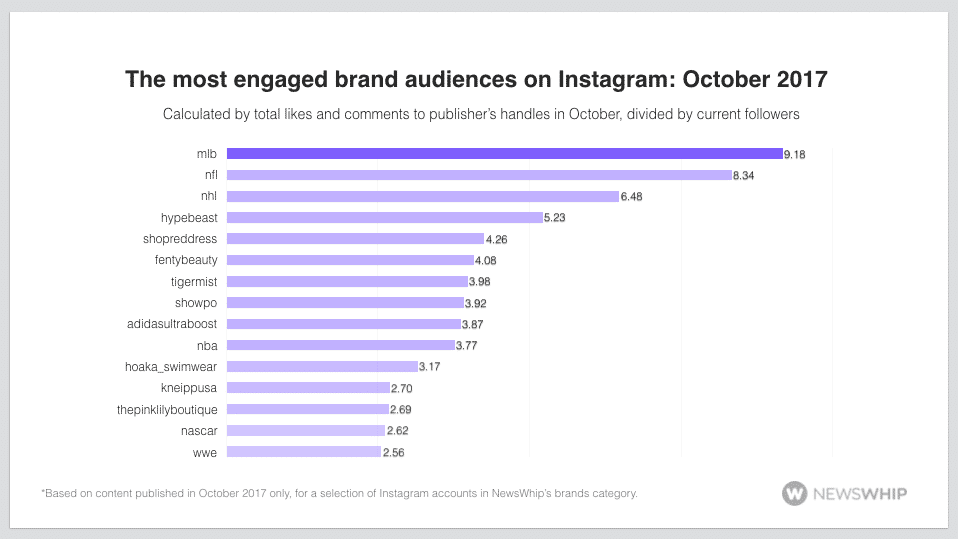
(We calculated this by looking at the top 1000 English-language brands on Instagram, and dividing their total likes and comments by their amount of followers. Let us know if you think we missed one!)
Even just beyond the top ten, when we looked at the 50 brands in our analysis with the most engaged audiences, we saw that 26 of them were fashion and beauty brands. The others were divided among sports and car brands, with a few fitness, food, and tech brands thrown in.
So what can we learn from the top content of these brands? We looked at the 20 top-engaged fashion and beauty brands to find out.
1) They post A LOT
Of the brands we analyzed, all of them were posting at least once a day. However, others were posting substantially more. Tigermist was posting upwards of an average 26 times a day.
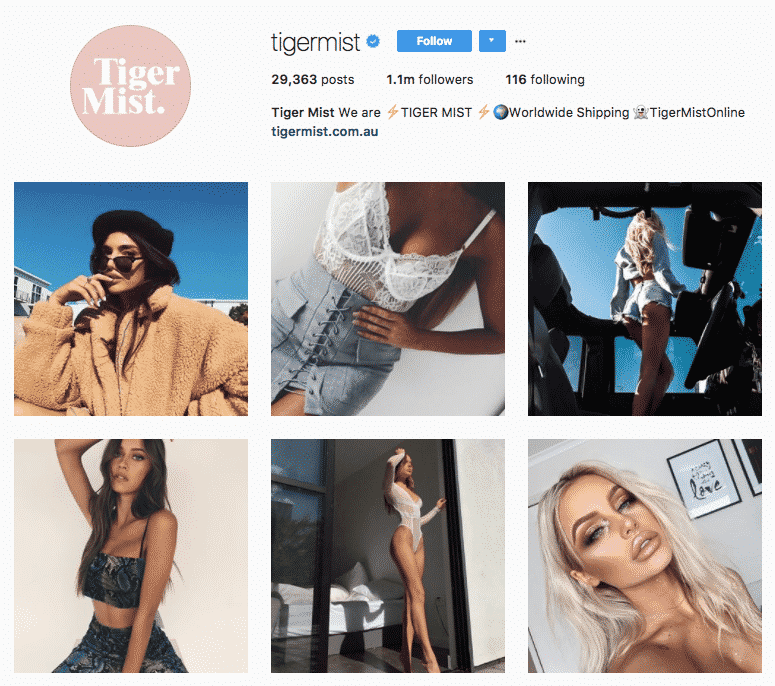
These six posts on Tiger Mist’s Instagram were posted in a two-hour window. With an “effortlessly cool girl” vibe, the photos all used influencers to show off products.
The median for these 20 brands was six Instagram posts a day. Sixteen of the 20 brands were posting at least three times a day. Looking into the formats, the median for photos accounted for 93 percent of what the brands posted.
2) They use photos and carousels to ramp up engagements
When we averaged the average engagements per post of the 20 brands, we saw that photos and carousels are driving the bulk of engagements.

Though not extremely different, photo posts drive 1.63 times the average engagements as video posts.
3) They encourage an almost cultlike following
Both Fenty and Kylie Cosmetics built a community of superfans through the power of Rihanna and Kylie Jenner. But some of these other brands have also cultivated a feeling of belonging to an exclusive club.
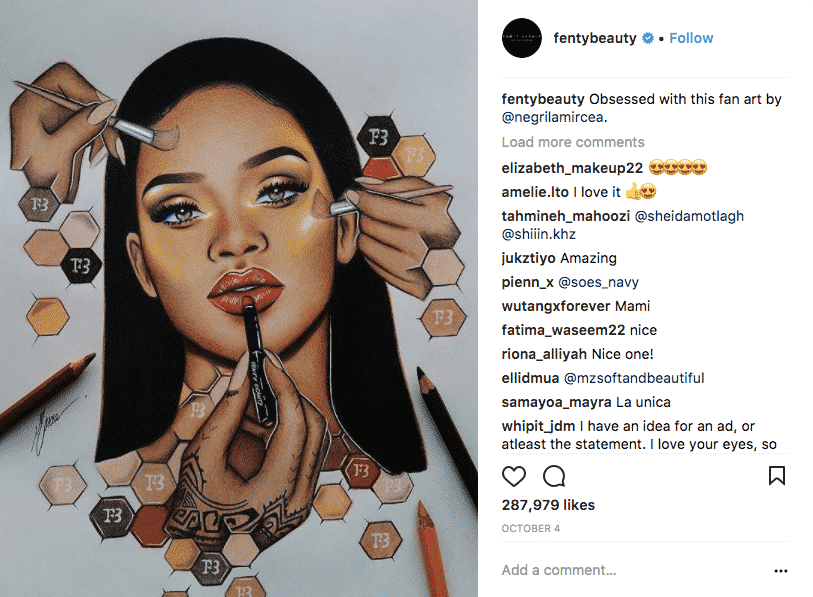
One way the brands do this is by reposting content from their super fans. This helps them keep up that steady stream of content and make fans feel included.

Lime Crime is another notable one here. The brand addresses its followers as unicorns, which both makes them part of the group and singles them out as being unique.
4) They use highly specialized hashtags
On that note, we looked at the top used hashtags of these 20 brands. Most commonly, the hashtags were unique to their brand or part of a specific content campaign. This allows fans to both discover related content or post their own contributions.
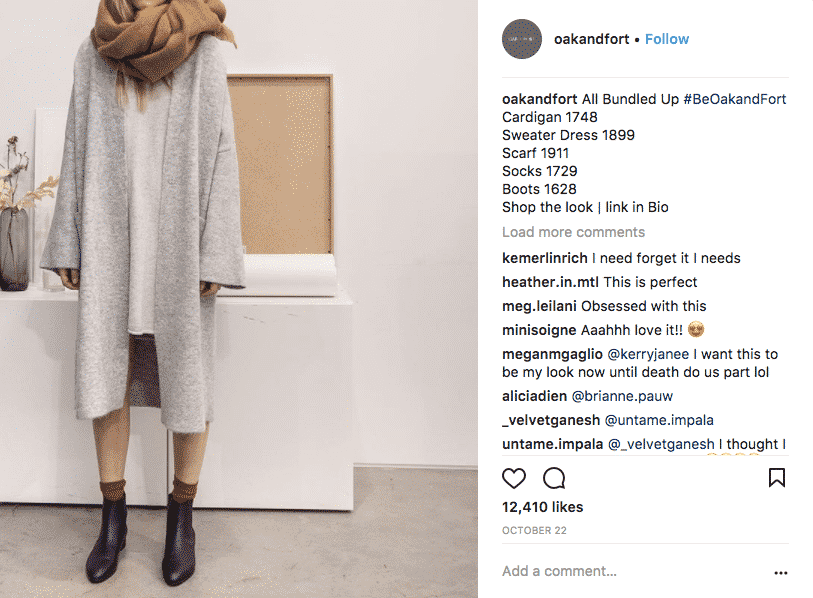
Oak + Fort, for example, uses the hashtag #BeOakandFort across its three accounts.
Other common hashtags reveal what their users care about, from topics like wellness (#treatyoself, #spaday) to what’s in the products themselves (#vegan, #naturalingredients). By keeping a pulse on what trending topics their target audience cares about, these brands can grow their followers.
5) They use giveaways to excite their fans
We analyzed the top ten posts across the 20 brands to discover what tactics were both most common and most successful. Thirty-five percent of the top 20 had giveaways in their top posts.
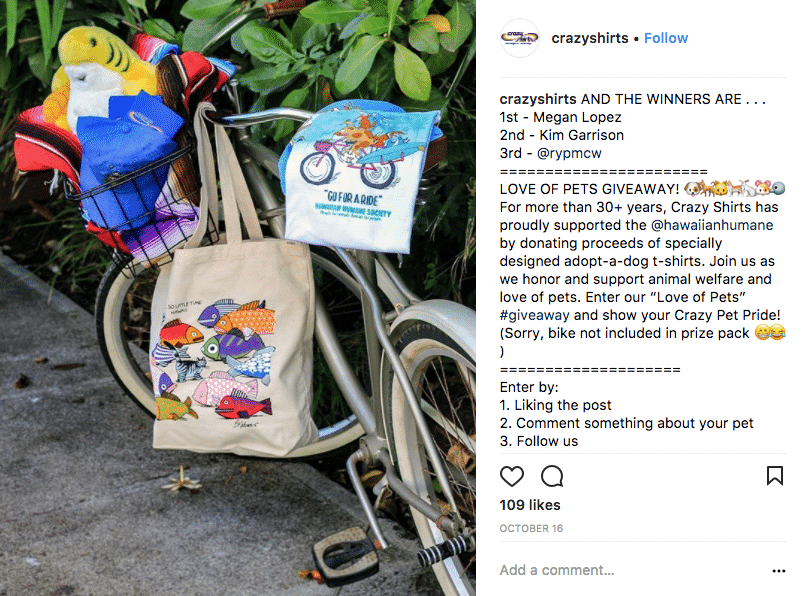
The giveaways were often gameified, encouraging engagement by asking followers to tag a friend, use an emoji, or write a comment following a specific prompt.
6) They go all-in on product or they act like a publisher
There seemed to be two distinct tactics that the brands took. Either their top ten posts were primarily product-focused, or they were content-focused, with posts around pop culture, human interest stories, animals, and humorous memes.

The Rsvlts brand’s top Instagram posts were primarily human interest stories around ordinary people carrying out extraordinary feats. These emotionally-charged posts work well for publishers too.
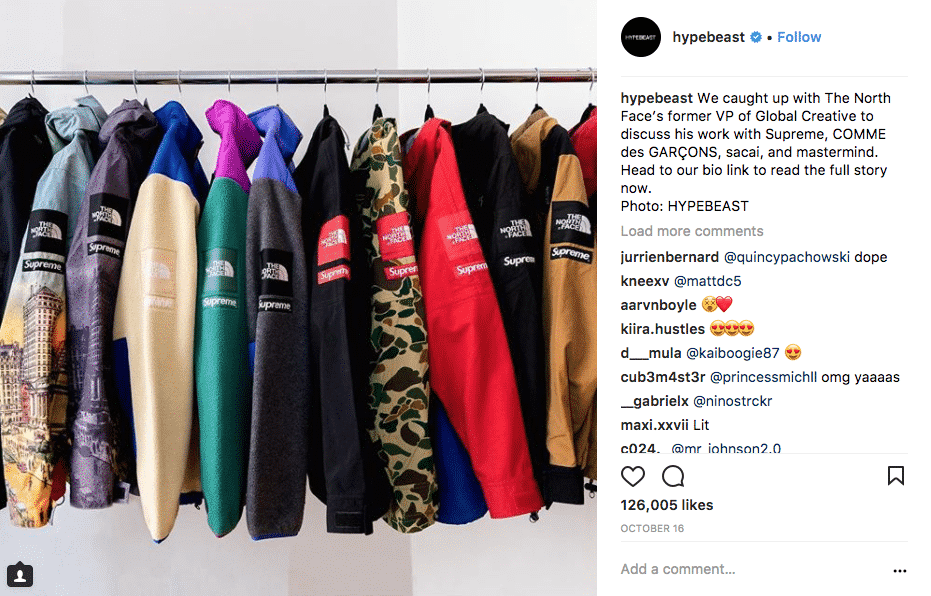
Hypebeast has also embraced more of a publisher role, even publishing interviews with designers.
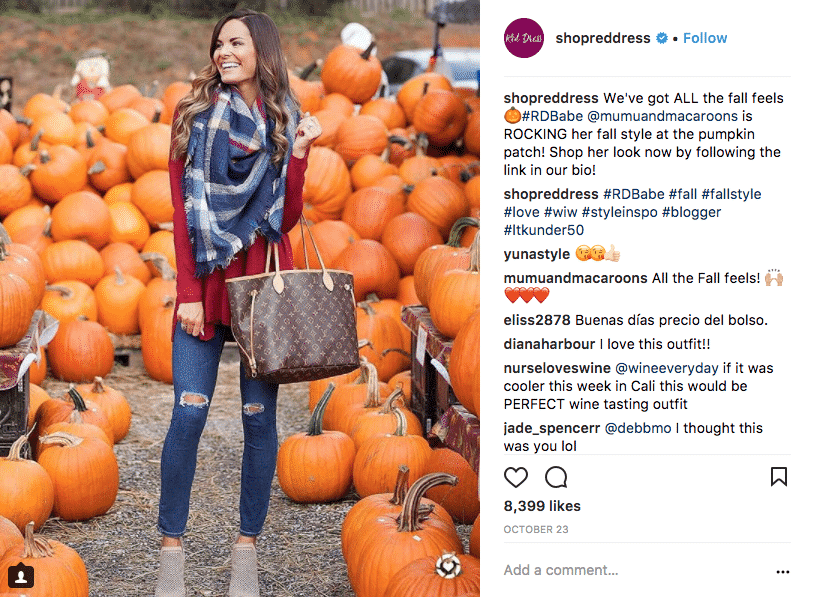
Meanwhile, most of Red Dress’s top posts came from outfit inspirations. Across both of these tactics, the brands’ top posts often included seasonal references, such as to autumn or Halloween. Half of the twenty publishers had this tactic appear in their top ten posts.
7) They cultivate inspiration and a brand aesthetic
Instagram is the inspiration platform, and fashion and beauty are two of the industries best suited to embrace that.
While many of the product posts were inspirational themselves, some of the other top posts showed landscapes, whimsically decorated rooms, or exotic destinations.

This shows that these brands are doing a great job of not only promoting their products but also promoting a unique identity and culture around their company.
8) They use micro-influencers
Obviously, Kylie and Rihanna don’t count here, but many of the other top brands here used micro-influencers. As we’ve noted before, the impact of micro-influencers can be as much as 60 percent higher.

Micro-influencers have a smaller audience, but this audience might feel a deeper connection and loyalty to a “real person” vs. a major celebrity or model.
9) Trend alert — they’re becoming more inclusive
Inclusivity is a hot topic these days. Just look at our recent analysis of the top holiday content trends. This has filtered down to brands, where showing you value what your audience cares about has a largely positive effect on social media.
One of Hoaka’s top posts featured diverse models, with their stretchmarks unedited and body tattoos.
https://www.instagram.com/p/Bbu2sezjoRa/
Meanwhile, Fenty went viral this year for its release of skincare products across 40 shades. Limecrime advertises as being “makeup for girls and boys who express themselves unapologetically”.
What to remember
Looking at smaller brands and publishers with highly engaged audiences can reveal highly effective tactics for your social strategy.
The social platforms are much more likely to surface content from one’s friends or family vs. a publisher or a brand. Because of that, you need to keep on top of the evolving formats, topics, and content classes that will resonate with your followers organically.
For a look at the content that NewsWhip’s machine-learning technology predicts will go viral across any industry, check out Spike.

NewsWhip
Email marketing@newswhip.com