
The first presidential debate for Election 2016 was Monday. Here’s how social media reacted to coverage from publishers.
This has been a heated election season that’s had the whole world watching. With the first presidential debate on Monday, millions of people turned to their screens.
So as publishers covered before, during, and after debate, where were people liking, sharing, and commenting on social media? We took a look, using NewsWhip Spike to pull the numbers from the day of the debate and two days after.
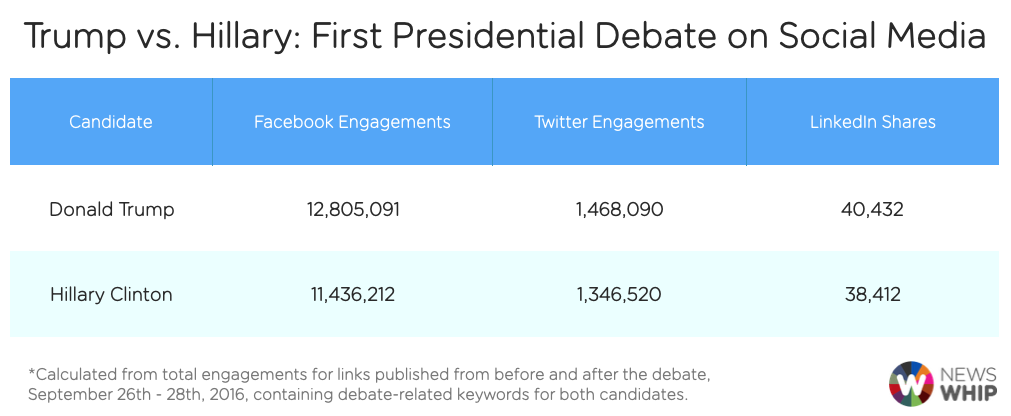
It was close. Trump edged narrowly ahead, when we analyzed the number of engagements on publishers’ links. The links surveyed contained keywords related to each candidate and the debates.
While we can’t speak to sentiment from these numbers alone, we can certainly see how actively engaged people were, and how heated this race is.
Which publishers had people engaging the most on Facebook?
Looking to Facebook alone, we dove into which publishers saw the most activity on Facebook for their debate content.
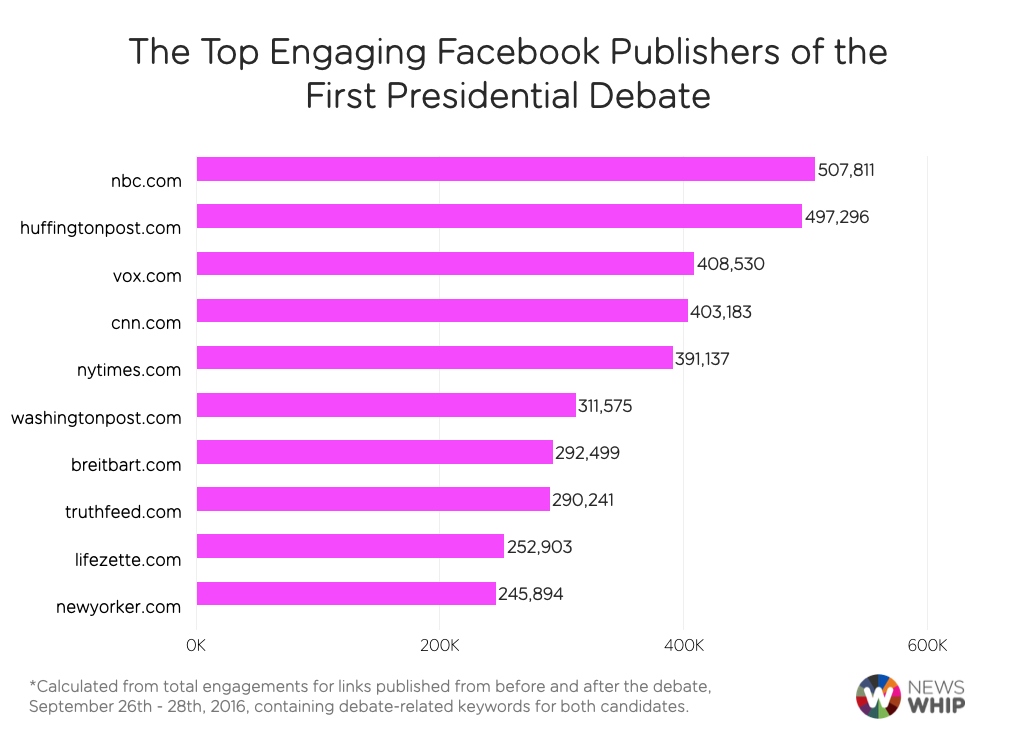
NBC drove the most engagements on links published, over 507,000. They were followed by Huffington Post and Vox. Other major news publishers made up the majority of the top ten.
More politically charged publishers like Breitbart, Truthfeed, and Lifezette also featured, coming in at numbers seven, eight, and nine.
All of these publishers saw upwards of 200,000 Facebook interactions on debate-related articles.
NBC’s ranking at top makes sense, as their news anchor Lester Holt was the moderator between the two candidates. Holt himself drove some significant buzz across social media, as media outlets scrutinized his performance.
[fb_pe url=”https://www.facebook.com/NBCNews/posts/1513992508620774?match=Z2l1bGlhbmk%3D” bottom=”30″]
NBC News published over 20 articles around the debate during the period we analyzed. This, a post-debate response from Rudy Giuliani, was their most engaging on Facebook.
They also covered fact checks, comments from other experts/politicians, quotes from the participants themselves, analyses on the topics the candidates covered, foreign media coverage of the debate, and others who were mentioned in the debate, such as a former Miss America winner.
Big stories like the presidential debate can lead to many further ideas for content. NBC is a general publisher, but even more focused publishers can find ways to report on related stories that they know their audience will care about.
What were the top stories?
As we saw the last time we analyzed the election season, the top performing articles are the ones that are the most divisive. These articles ranged from slamming the candidates to satirizing the plight of the people watching it.
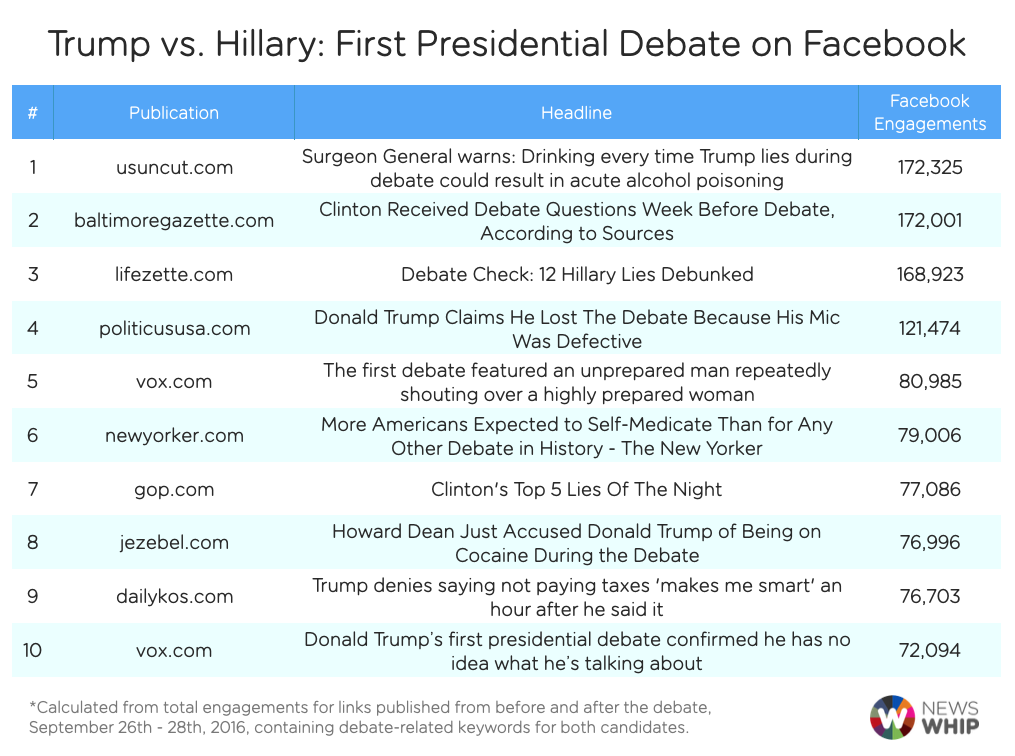
The top article, from US Uncut, was one of these articles, and drove over 172,000 Facebook engagements.
[fb_pe url=”https://www.facebook.com/2016HillaryClinton/posts/1175393929187450?” bottom=”30″]
The top articles are highly sensational, accusing both candidates of foul play before and during the debate. This sort of emotionally-charged content can get readers hyped up, and more likely to react, whether it’s in agreement or disagreement.
Over on LinkedIn, the top stories didn’t get nearly as heated.
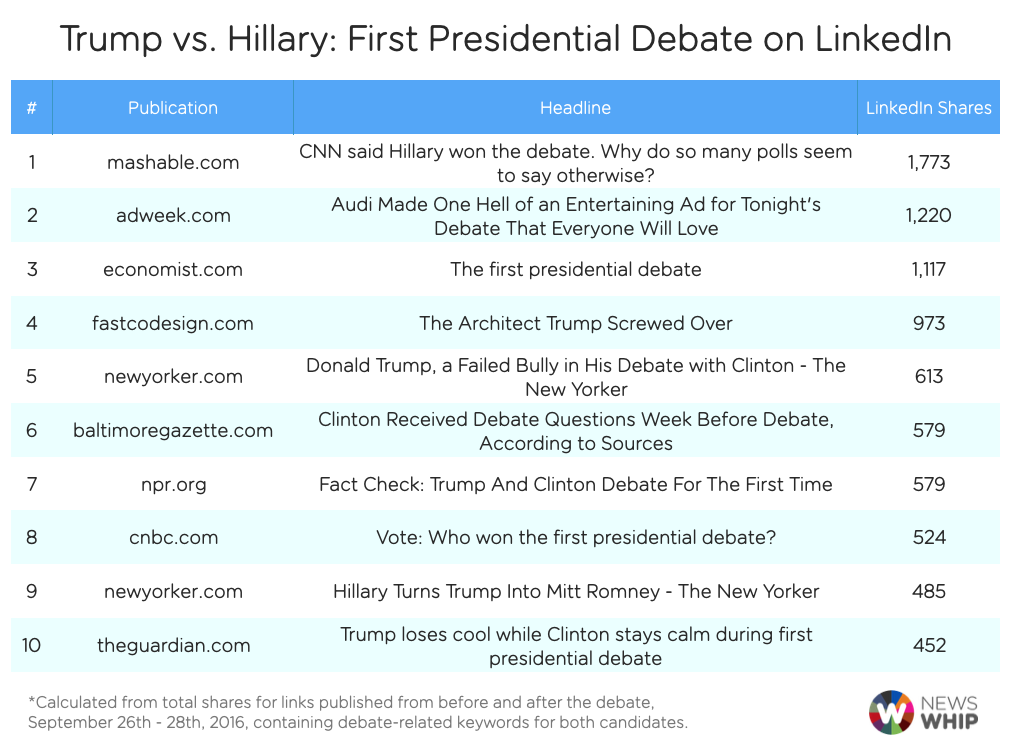
These were the top ten debate-related articles that were shared on LinkedIn. While some of the articles are still critical toward the candidates, they have nowhere near the impassioned language that the top articles on Facebook had.
Knowing your channel is important for knowing which of your stories will resound on each platform. Where are your social media users coming from? What do they care about hearing from you on Facebook, on Twitter, on LinkedIn?
What to Know
As we get closer to November, the most engaging articles on social media can give a pulse on how charged this election season is. Social media monitoring can help publishers see which issues their readers are engaging heavily with, across platforms.
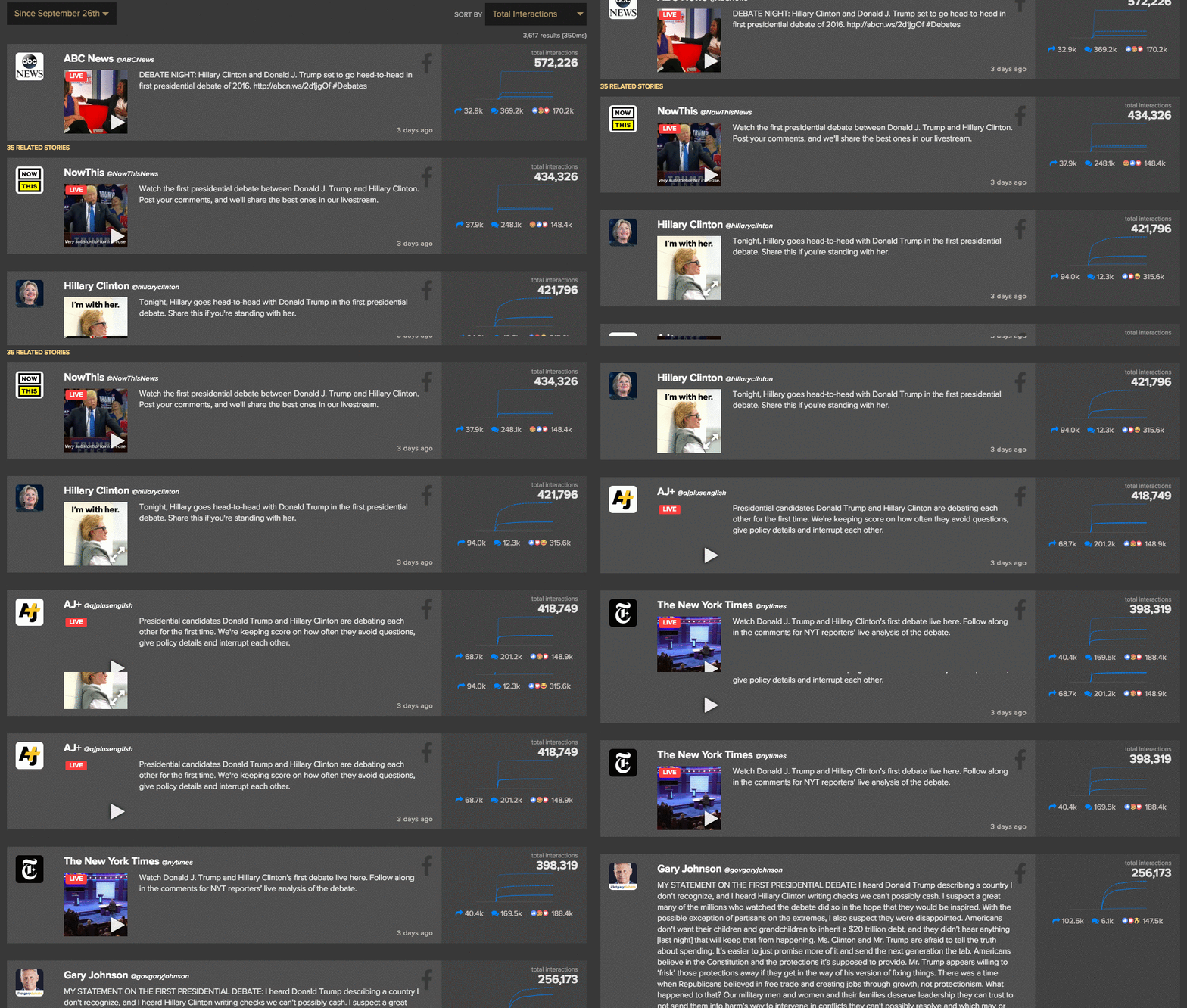
The top presidential debate native Facebook content from September 26th to September 29th. Video coverage of the debate featured predominantly.
Native content is also a consideration; how to adapt your political content to platforms like Instagram and Snapchat, and keep your followers engaged. Knowing your audience’s needs and how to reach them will help keep you ahead of the polls this election season.