For years, Google Alerts has been the go-to solution for tracking mentions of keywords, brands, and topics online. While it served its purpose, its limitations—especially in speed and relevancy—have become increasingly apparent in today’s fragmented, fast-paced media landscape. With daily digests and basic keyword matching, traditional alerts can feel outdated and reactive.
NewsWhip’s new AI Agent changes that. Built for real-time, intelligent media monitoring, it delivers high-signal alerts when they matter most, instantly and automatically.
Real-Time Monitoring That Doesn’t Wait
Google Alerts often delivers notifications hours or even a full day after content is published, whereas NewsWhip’s AI Agent operates in real time. It continuously scans global media for matches based on your criteria and sends alerts the moment a relevant piece is detected. For communications teams, marketers, and analysts, this time advantage can be critical.
Alerts That Are Evaluated, Not Just Triggered
NewsWhip’s AI Agent does more than match keywords. It uses artificial intelligence to assess each signal for relevance to you. This means you’re not flooded with alerts for every mention, just the ones that meet your specific needs. You set the criteria, and the AI does the filtering.
This makes it an ideal solution for crisis monitoring, brand tracking, competitive intelligence, and reputation management, where receiving the right alert at the right time can drive better decisions.
These capabilities allow professionals to see not just that something happened, but whether it’s likely to matter.
A Smarter, Faster Way to Stay Informed
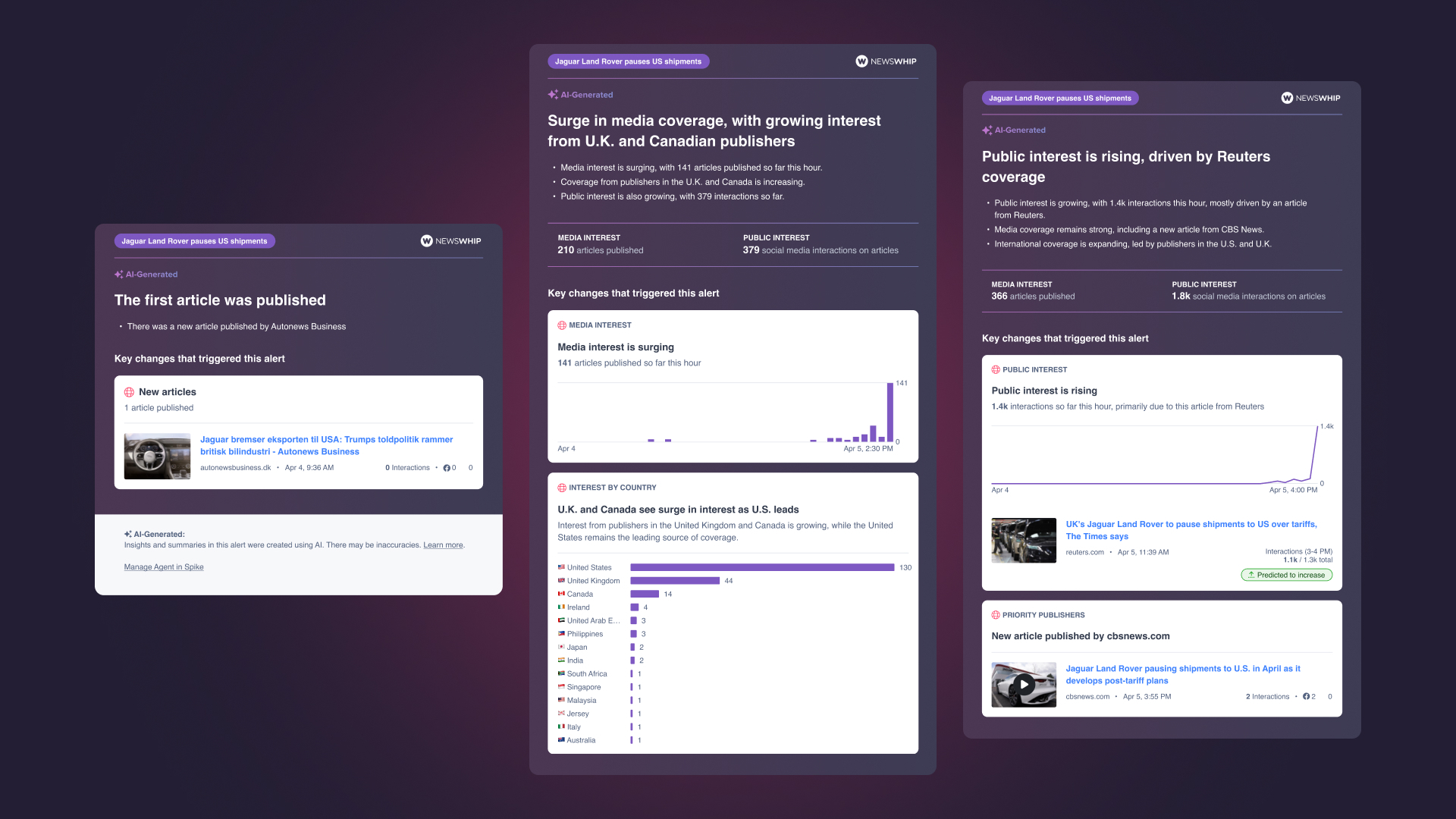
When an alert is triggered, NewsWhip sends a detailed email notification immediately, with all the context needed to assess the situation quickly. This turns your monitoring agent into a real-time analyst, constantly working in the background and surfacing only the insights that are relevant to you.
For teams that need to stay ahead of emerging narratives, misinformation, or fast-moving trends, this immediacy and precision offers a significant edge.
Conclusion
If you’re still relying on Google Alerts, it may be time to upgrade. NewsWhip’s AI Agent offers the speed, intelligence, and customization that modern professionals require. It’s built for a world where timing is everything, and where generic alerts are no longer enough.