
Welcome back to the NewsWhip Publisher Pulse. I’m Chris Miles, a former member of the CrowdTangle and Meta news team, now helping NewsWhip build resources and outreach to news professionals like you.
The first few months of 2025 have given us social media whiplash. Facebook shook things up right at the start of January with major contentrule changes. A few weeks later, TikTok flatlined and went offline (briefly), only to come roaring back from the dead. X has completed its 180 rebrand as the go-to megaphone for conservative influencers.
And against this chaotic backdrop, NewsWhip’s Q1 2025 Publisher Report reveals what has been happening to news publishers through all of this.
You can read the full report here. In sum, TikTok is seeing a surge in news engagement, Facebook is back to promoting hard news in feed, and legacy outlets like Fox, CBS, and CNN are riding a wave of engagement.
The feeds they are ‘a-shifting — and these are the biggest takeaways from the report:
1. TikTok’s ascendancy as a news platform
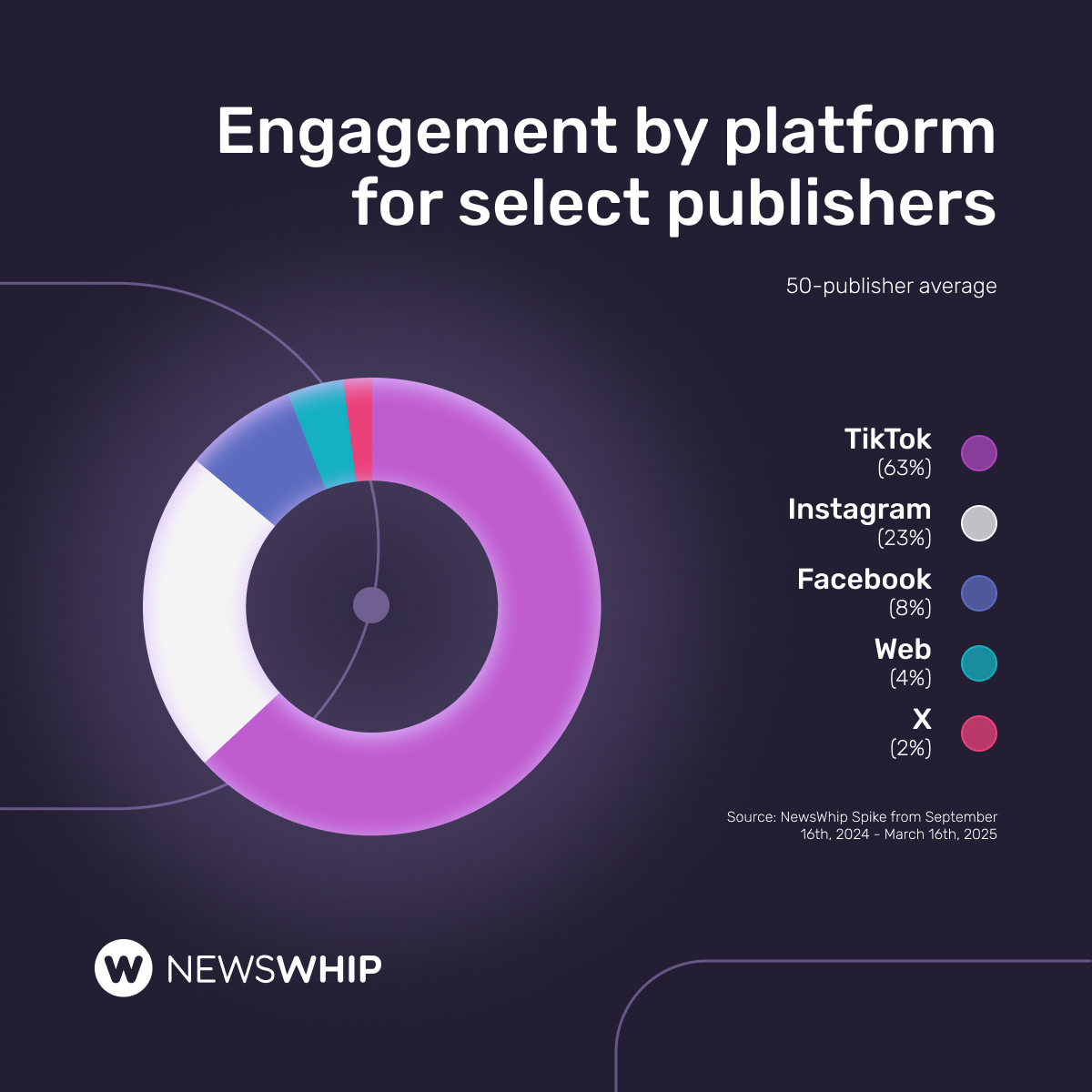
TikTok — banned, then not banned, but still owned by Bytdance, for now at least IDK 🤷♂️ — is turning into a news engagement powerhouse. The app once known for Renegade dance challenges now accounts for 63% of total engagements among the group of 50 publishers NewsWhip analyzed. This FAR surpasses the next biggest platform for publisher engagement, Instagram, which holds 20%, and is a sizable shift away from the roughly equal proportions of engagement they held in the last report. The biggest publishers by engagement on TikTok in Q1 were ESPN, DailyMail, Bleacher Report, CBS News and NBC News.
Significance: TikTok’s ever-growing influence as a primary platform for news consumption is becoming more clear, especially among younger audiences. More so, short-form video (Reels, TikToks, Shorts) isn’t just growing; it’s often the dominant format for engagement across many social platforms beyond TikTok. More than ever, a publisher that ignores video risks becoming invisible on major engagement hubs.
2. Resurgence of news on Facebook
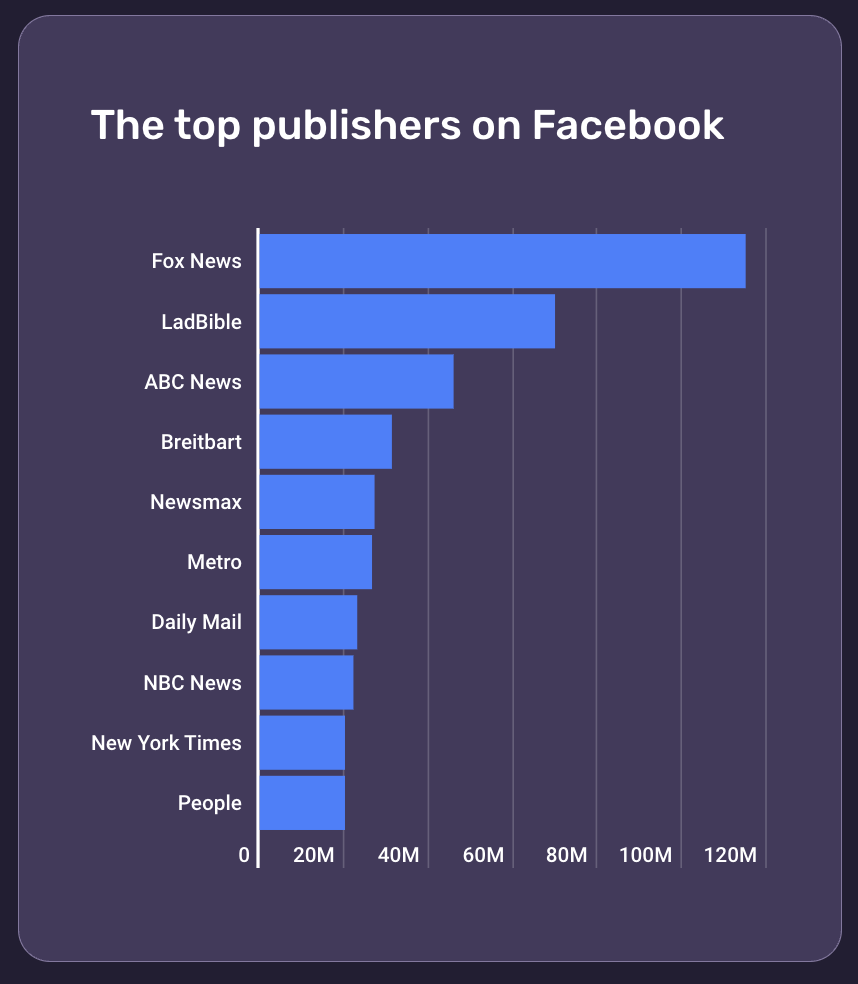
Facebook is BACK. Or rather Facebook put the news back in the feed. After an algorithm change earlier this year to promote civic content, the change has had a very clear positive impact for hard news: Engagement with news content on Facebook and has significantly increased compared to previous quarters. Publishers producing in-depth, engaging content that sparks meaningful interactions seem to benefit the most. Case in point, The Atlantic, which saw almost a quarter of it’s engagement for it’s longer form, political-heavy content come from Facebook in the first quarter.
Significance: This all calls attention to the need for the Facebook optimizing playbooks of years past. As you’re dusting those off, keep these points in mind:
- Leverage Facebook’s renewed engagement by sharing timely and relevant news stories.
- Develop content that encourages discussions, such as opinion pieces, in-depth analyses, and interactive posts that prompt user comments.
- Ensure content is well-researched and credible to meet the algorithm’s scrutiny of source reliability, thereby improving chances of higher feed placement.
- Utilize Facebook Groups to build community and foster discussions around your content.
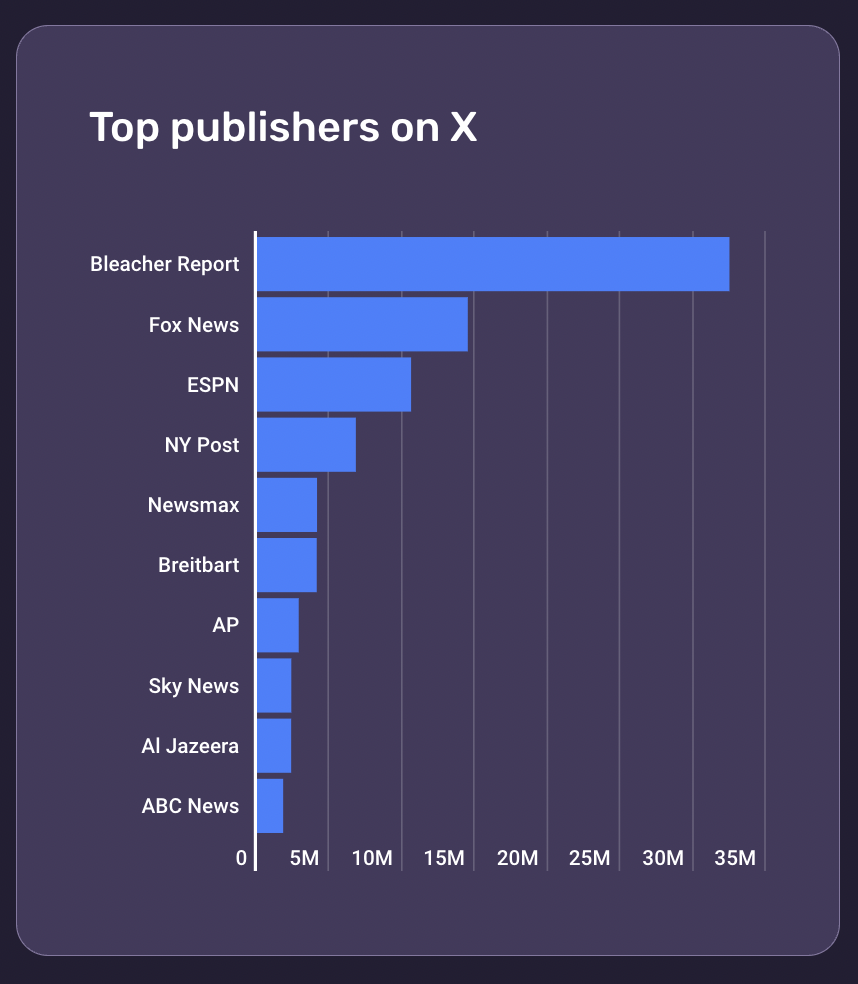
Oh, and you’ll want to dust off the old Twitter playbook, too — news engagement on X is also surging:
3. The rise of hard news 👊🇺🇸🔥
Hard news is having a moment. Fox News, ABC, CBS, and CNN all surged up the rankings in Q1 2025—clear proof that politically driven, news-first content still drives serious clicks. On Facebook alone, these outlets saw a 200% increase (!!) in engagement year-over-year. Fox News alone saw a massive 700%+ spike — putting them squarely back in the viral spotlight.
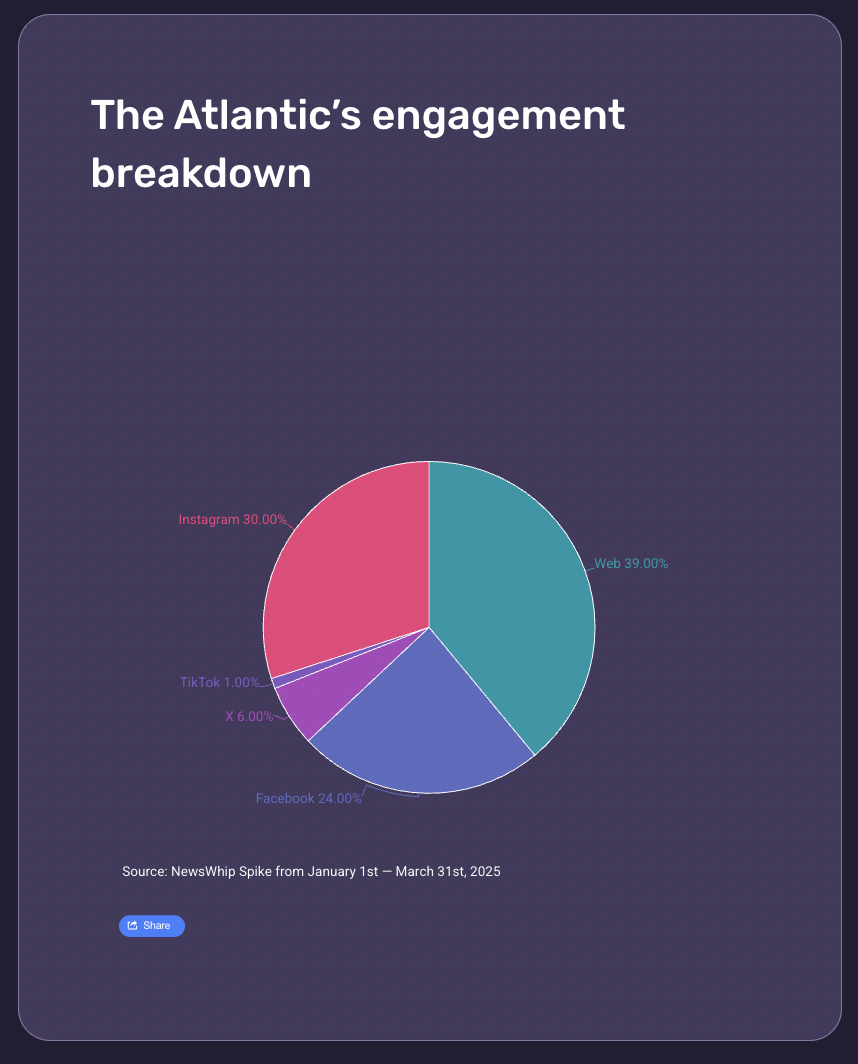
Significance:While hard news as a whole is likely on the rise (Trump Bump 2.0?) resulting in a renewed public interest in hard news, a lot of this is honestly algorithm-related, and that algorithm can change at any time. But while things are up, there’s an opportunity for traditional publishers to reclaim audience attention by delivering timely and in-depth reporting. See how the Atlantic is doing it:
4. A few top publishers are dominating
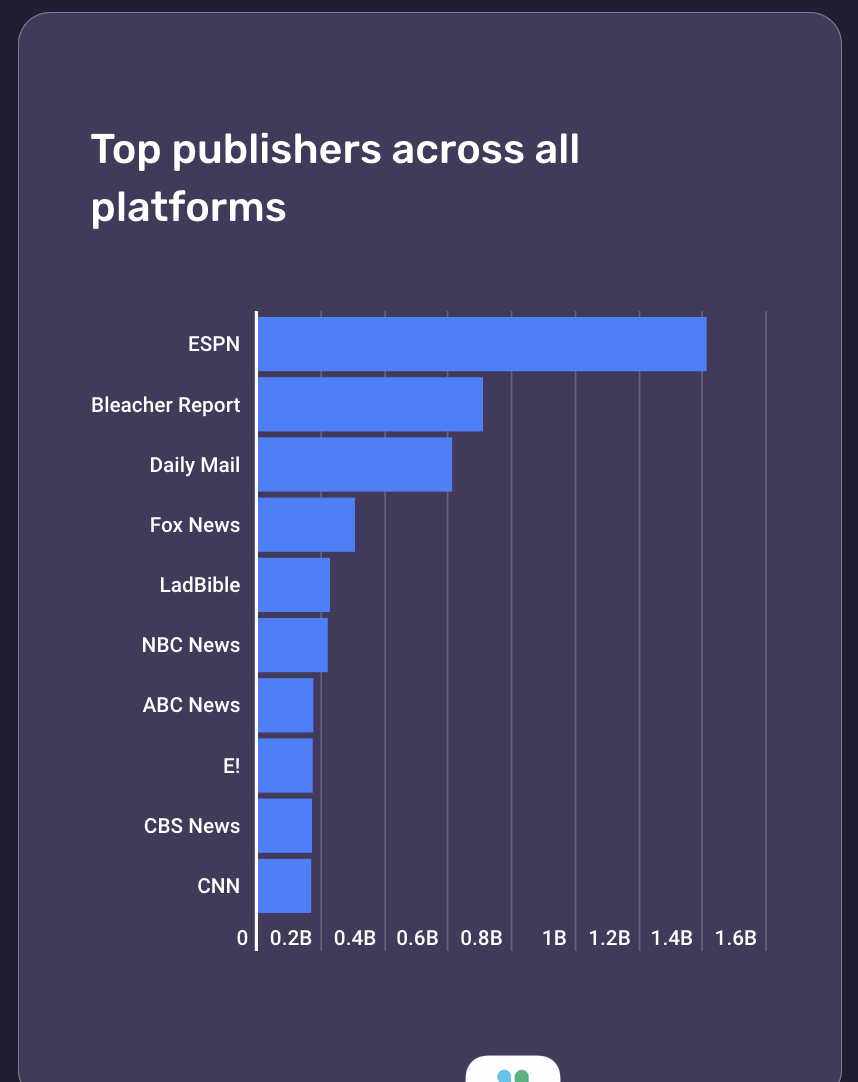
Five publishers — ESPN, Bleacher Report, Daily Mail, LADbible, and Fox News — account for over half of total engagements across all platforms from among this group of publishers.
Significance: This all underscored the importance of brand recognition and consistent content audience-first content strategies. These outlets didn’t stumble into success; they’ve cultivated loyal audiences by mastering platform-native formats, all while reinforcing a clear editorial voice. For emerging or mid-sized publishers, there’s a roadmap here: Study what these giants do well (and often), then carve out your own lane by leaning into niche expertise, visual branding, and repeatable content structures that drive engagement.
A playbook for the 2025 social media landscape
To capitalize on these trends, I wanted to share a strategy playbook to future-proof your newsroom’s social and digital game. Ideally, this will help build smarter, more resilient journalism that meets your audience where they are and in how they engage with you:
1. Think about making TikTok your assignment desk
Start treating TikTok like a publishing platform, not a promo tool. Assign beat reporters or producers to help zero-in to the pulse of your community, what they’re sharing and taking about on the app, and what’s really going viral. And it’s not just TikTok — think about doing the same for other platforms and communities like Reddit and Facebook Groups, Remember: if you’re not there, you’re invisible to a huge swath of your potential audience.
2. Know your digital audience, and what they want
Each platform has a clear format lane — lean into it. TikTok = short video. Instagram = culture visuals. Facebook = photo-driven stories, even longer ones. X = breaking news and politics. Study the content strategies of leading publishers to identify successful formats and topics, adapting them to fit your brand’s voice.
3. Ride Facebook’s news comeback while it lasts
Double down on timely, shareable stories that hit during high-traffic windows. Use Facebook groups and your page to resurface evergreen explainers and make your reporters more visible. Rebuild your Facebook audience strategy based on relevance, not reach. With engagement up by orders of magnitude for news publishers now is the time to re-engage dormant audiences — but stay nimble. The algorithm giveth, and it taketh away.
3. Treat hard news as a competitive advantage
Put resources — and engagement — behind deeply reported pieces, policy explainers, and fact-checked content, especially on topics with political, civic, or cultural stakes. Treat trust-building content as the backbone of your digital strategy. With the resurgence of outlets like The Atlantic, CBS News, ABC News, and CNN, audiences are signaling they want real reporting. We live in interesting times, and it’s the role of journalists to document these stories — people are looking for coverage of significant events and issues.
4. Turn data into a daily tool
Use social listening tools (NewsWhip!!) to identify not just what’s trending, but why. Build daily huddles or dashboards that reflect what’s resonating on TikTok, Facebook, and X, and adapt story formats accordingly. Utilize these tools to monitor engagement metrics and adjust strategies in real-time for optimal performance.
That’s all for us at the moment. If you’re looking to dig deeper into engagement strategy, check this out: We partnered with the International News Media Association (INMA) to put together this blog post: Interaction rate, engagement velocity are among key “golden metrics” for social teams to track
Got tips or want to see us dive into anything in particular? Just DM! We’re eager to explore.