
We look back at some of the key social publishing takeaways from this week’s News Xchange conference in Amsterdam, from Facebook’s role in breaking news to Twitter’s live video push.
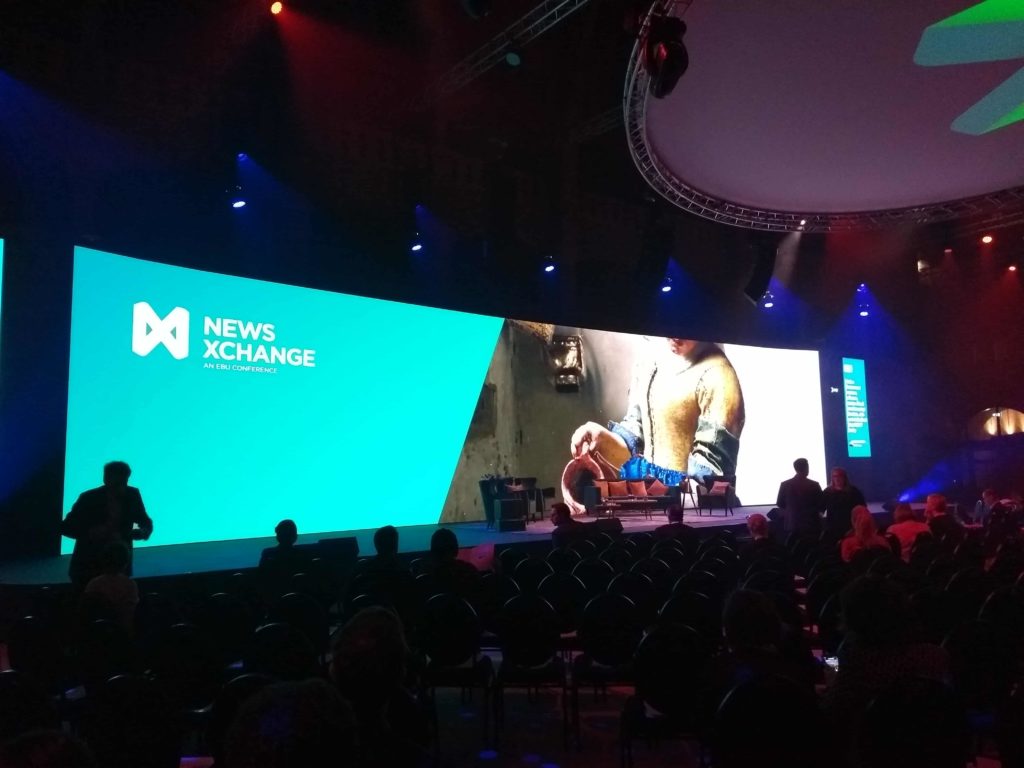
This week saw the 17th edition of the News Xchange media conference take place in Amsterdam.
The two-day event was organised by the European Broadcasting Union and brought together journalists, editors and more from broadcasters and other newsrooms from over 50 countries. Facebook’s Head of News Partnerships, the editor-in-chief of RT, and representatives from newsrooms across the world were among the speakers.
The conference took place against the backdrop of falling trust in news media, heightened partisanship in digital publishing, and ongoing revenue problems. Despite all this, EBU Managing Director Amy Selwyn told attendees that they were living through a ‘Golden Age’ of journalism, where these obstacles offered a chance to come up with unique solutions and new practices in media.
https://twitter.com/NewsXchange/status/930720224596451328
As ever, journalism’s relationship with social media platforms, both from an editorial and financial perspective, were key topics of conversation. Representatives from Facebook, Google, and Twitter all took to the stage to showcase, explain and engage with journalists. Here were three talking points in the social publishing space from the conference.
Social video: Still an evolving medium
Despite so much change in social video publishing in the last 18 months, there seems to still be plenty of room for innovation. Over the course of the two days, conference attendees heard from multiple organisations using video in new ways to tell stories and reach new viewers.
One of those came from Yusuf Omar and Sumaiya Omar, co-founders at #HashtagOurStories, ‘multi-channel mobile network’. Yusuf explained how the newsrooms that are succeeding today have managed to shift from a central to a distributed content system. For some ideas on what distributed, community-led video journalism can look like, check out the group’s Facebook page.
https://twitter.com/rhyscrilley/status/930763445879955456
The Facebook Journalism team also took to the stage to share some best practices around using video on the platform. They particularly gave much attention to how 360 video is a format that continues to grow in usage and functionality. 360 video has been available since 2015 on the platform, but the format is being used more and more by publishers this year.
https://twitter.com/NewsXchange/status/930765016961183744
Could Facebook focus on real-time events and news in the future?
When it comes to breaking news stories in real time, Twitter is generally considered the number one social platform. While Facebook hasn’t traditionally been seen as much of a real-time competitor, its reach means that it has an attractive reason to improve its live event offering.
On top of that, it has unrivalled penetration when it comes to the number of its users who use the platform to get news — 45 percent of US adults, according to a recent Pew report. So it stands to reason that if Facebook did make a serious play to muscle in on the real-time space, they could challenge Twitter’s USP.
At News XChange, Facebook’s Head of News Partnerships, Campbell Brown, indicated that the platform may be starting to think about how to capitalise more on real-time information and news. “Facebook should have a place for breaking news in a way that does not impact news feed,” she said.
https://twitter.com/jessyabouhabib/status/930790334711435264
Such a feature, such as a ‘breaking’ or ‘real time’ tab could potentially help Facebook consolidate itself as a place where people instinctively go to during live events, a lucrative area, given the real-time advertising opportunities.
It’s worth noting that Facebook has previously experimented with developing a breaking news service with Notify, an app that delivered notifications from publishers to users’ phones. The app directed readers to the publisher’s website rather than the Facebook news feed, however. It ended up being pulled just a few months after its launch.
Twitter: New steps to tackle harassment, live video push
At the conference, Twitter outlined the new measures that the platform has been taking in the wake of criticism of their handling of abuse complaints. On a panel discussion, several journalists pointed out that women of colour in particular had been experiencing abuse on the platform for years.
https://twitter.com/mjenkins/status/931126882233470976
In Amsterdam, Twitter representatives noted the need to combat harassment of journalists and other users on its platform. Commenting on the new verification and content guidelines introduced by the platform this month, Peter Greenberger, head of news partnerships at Twitter, said that “verification has been misunderstood”. “Over time it became perceived as a badge of authority…that was not our intention,” he added. Saying that the issue was a “huge priority” for Twitter, Greenberg said that Twitter staff were taking action on 10 times more abusive accounts than last year.
https://twitter.com/ReutersAgency/status/931093366380613632
Separately, Twitter placed emphasis on the possibilities available for live video (ie Periscope) for publishers on the platform. Greenberg also highlighted partnerships with publishers such as Bloomberg and BuzzFeed, which are producing live scheduled video content for Twitter.
At last count in September, Twitter had 16 separate live shows, backed by different sponsors, while senior Twitter executives have already indicated that live video — perhaps as much as 24-hour coverage — is a key part of future growth plans. Ultimately, differentiating the live video offering from other platforms could be a key factor in the success of the format for Twitter.
For direct insight into what’s engaging audiences on social media across any vertical, take a trial of NewsWhip Analytics.