
After Facebook’s algorithm update clamping down on clickbait headline, we look at four types of headlines that attract high levels of engagement on Facebook.
Social media editors spend a lot of time tweaking the headlines of their stories to make sure they hit the right note with readers in the news feed. We see the stories that rise and fall based on engagements on Facebook every day in Spike.
An announcement from Facebook last week now means that there’s less chance that ‘clickbait’ stories will see sustained interactions in the news feed.
In a post titled ‘Further Reducing Clickbait in Feed‘, we heard details of measures Facebook would be taking measures to make sure that “people will see fewer clickbait stories and more of the stories they want to see higher up in their feeds.”
This led to a discussion online about the nature of successful Facebook headlines, and how they may differ from headlines elsewhere.
There can be a number of variants that affect the success of a story on social media. What’s in the news? What are your friends and extended network talking about? Then there will always be outliers that go viral because an influential social media account shared it, or it resonated particularly strongly with readers.
But studying the output of the publishers that do get consistently high levels of engagement can be informative. Many of these publishers tend to follow a headline format that they’ve found to work after testing and tweaking. Last week’s announcement sent us searching for headlines that really resonated on Facebook.
We looked at popular stories in Spike to see what seems to work. It’s important to note that not all of the attributes work together (although the last one applies to all). Different publishers should look at their data, and adjust accordingly. Here’s what we found – let us know if you have any other examples in the comments below.
They’re conversational and descriptive
Many of the most successful stories are extremely descriptive, or use language that reads in a conversational tone. Business Insider and the Independent are two websites that employ this tactic.
On the descriptive side, the Independent take a literal approach to many of their stories, explaining what happened in a story using clear language.

We’ve recorded the site a top 25 Facebook publisher earlier this year.
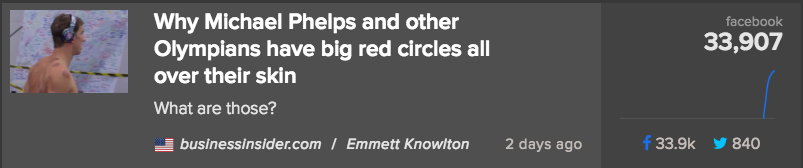
Meanwhile, Business Insider employ a conversational tone that tells the reader what’s being explained and talked about in a pretty straightforward manner. One thing to remember though: keep the headlines reasonably short, to avoid them being cut off on mobile.
They speak to a personal experience
Traditionally, we’ve seen that personal stories and blogs, opinion articles and other personal takes perform quite strongly on Facebook. First person posts and unique viewpoints tend to get people sharing heavily, especially if it’s a topic that they can relate to personally.
So, what’s an example?
Another example is the story “What it’s like to be black in Naperville, Chicago“. Published in the Chicago Tribune, most of its initial audience would largely have been regional readers who could relate to the . The quality of the piece ensured that it was shared from there. It really resonated with readers on Facebook, attracting over 160,000 Facebook engagements since July 18.
The Huffington Post is another example of a publisher that sees great success with their opinion pieces.

These stories take the unique part of the personal approach and make it relatable for readers.
They’re vivid and interesting
Good headlines give a reason for the reader to read on.
On social media, this consideration takes on extra importance. The majority of Facebook users haven’t signed up to read the news. Often, they aren’t even looking to learn more about a specific event. They’re checking out what happening with their friends and family. However, if they do come across a post that looks interesting, they’re likely to click to learn more.
That’s the crucial window of attention that the social media headline writer must appeal to. Be descriptive in your headlines, but don’t afraid to be creative. Quartz are a good example of a site that have fun with their headlines, while not overselling the story.

They don’t trick the reader
This is a crucial point that the new algorithm update looks to improve.
To be specific, here are the two criteria that Facebook say qualify a headline as being misleading:
(1) if the headline withholds information required to understand what the content of the article is; and (2) if the headline exaggerates the article to create misleading expectations for the reader.
So the ‘…you won’t believe what happened next’ headline structure is not a good approach. Another popular headline trope on social media is the question-driven piece, that poses an alternative (and usually false or contrarian) finding or viewpoint to the one expressed in the actual piece itself. This model is also not entirely to be counted on.
A new report from the Engaging News Project finds that “compared to traditional headlines, people had slightly more negative reactions toward the question-based headline.”
Of the sites in our top 25 rankings, the ones with staying power are the ones that have a longer-term outlook.
Ultimately, the engagement levels of your content will come down to quality. Readers don’t appreciate being duped, but if the story is one that delivers what it promises, there’s a chance they’ll share it on, a crucial move for anyone looking to grow their audience. Being able to honestly ‘sell’ the story on social media is crucial, and will stand to you in the long term.