
The News Creators Disrupting the Mainstream on Social
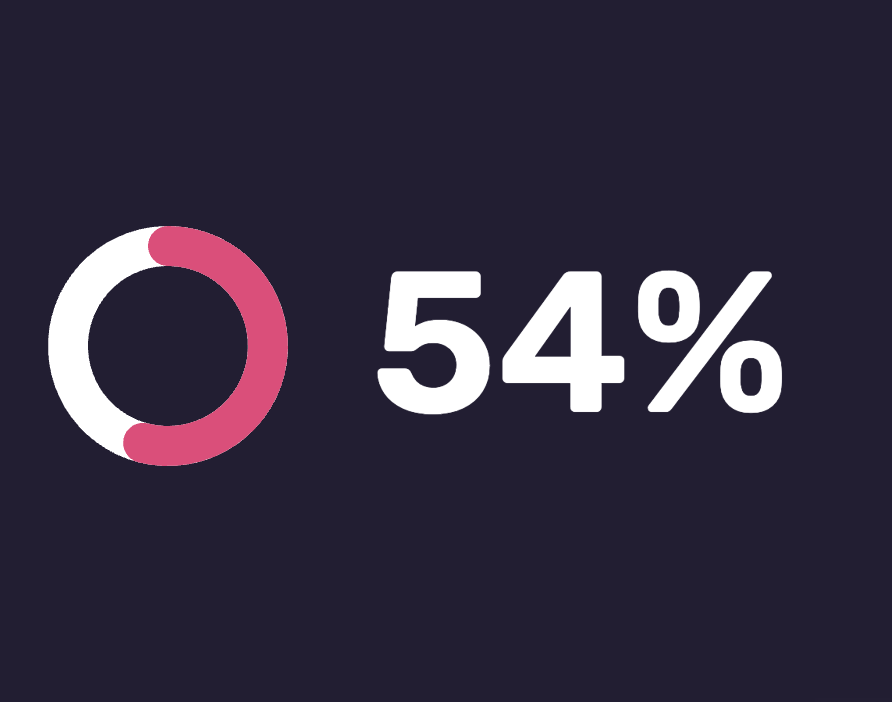
Chances are that you, or at least someone you know, are one of the 54% of news consumers that get their news directly from social media. Of course, some of this is mainstream news accounts posting on social, as has been the case since the platforms first came on the scene.
But there’s a rising trend of new news creators proliferating across different platforms.
This report will highlight some of the key trends in the news creator space, and examine where their success is happening.
Let’s dig in.
Pew Research
It might not be an exhaustive list, but it shines a light on this emerging content format, as well as where that content gets engagement. So we took this list as a starting point to see the different platforms where they’re seeing success.
Cross-platform creators
It’s not an apples to apples comparison because the study looks at different groups of creators for each platform, but what the chart opposite does show is that there is still engagement to be found on all of the major platforms, and niches can be created anywhere.
Many of these accounts have been around for years, and have built trusted audiences on Facebook and X, so it’s no surprise to see those platforms get 33 million and 30 million engagements respectively in December.
TikTok is a newer platform — and there were far fewer posts from the news creators there — but it still generated more than 20 million engagements for the same month, from roughly 10% of the number of posts on Facebook and X.
Engagement by platform for Pew influencers

Instagram, however, is where most of the action was, with more than 50 million engagements in December, from around 5,000 posts. This equates to an average of 10,000 engagements per post on the photo sharing platform.
The lesson from Pew’s research is that each of these platforms can serve a very different purpose in the news ecosystem.
For this report, we’re going to focus on three of the more visual platforms of TikTok, YouTube, and Instagram, pull out some of the top creators on those platforms in terms of engagement and showcase the different types of content and styles of presentation that perform well on each. We’ll also highlight some of the things that news organizations can learn from these creators, who are often innovating new formats and best practices to reach their audiences.
Building an audience on TikTok
It’s a visual medium, and allows users to stitch together other videos and screenshots easily for added context or to easily provide background information on the topic at hand.
This lends itself to the kind of quick-take, short-form reaction videos that have proliferated on cable news for decades, though perhaps with more space for context and a whole new audience to consume that content.
A lot of the videos fall into this format, but that doesn’t mean they’re all the same — you can find a variety of different approaches to this kind of content, and the three examples below highlight three of those.
Dylan Page: News Daddy
Dylan Page is one of the biggest news creators on TikTok, thanks to his combination of news analysis, creative use of the platform’s features, and wit. He doesn’t use the name in his screen name any more, but he rose to prominence with the nickname News Daddy.
His videos feature breaking news updates and commentary on a variety of topics that are often stitched clips or include screenshots, making information easily digestible for users.
His ability to break down trending topics with speed, clarity, and a bit of humor resonates strongly with younger audiences on TikTok. In the one-month period we analyzed, Page earned over 25.7 million engagements with his videos, highlighting the massive reach and influence that news creators can achieve on the platform.
Dylan Page
@dylan.pageWhich one do you think is the craziest? 🤔😳 ♬ original sound - Dylan Page
Pearlmania on Matt Gaetz
@pearlmania500 Drake level accusations. #hiphop #senate #beef #banking #vanlife #kendricklamar #lawyer #pearlmania500 #studentloans ♬ A MINORRRR - heavyleansippa
Rough and ready takes from Pearlmania500
Pearlmania500 takes a less tailored approach to news content on TikTok, and that’s precisely what’s made him stand out. Instead of focusing solely on delivering news updates, he uses satire to unpack trending topics or current events.
Where Page and other creators use visuals to explain and engage audiences, Pearlmania’s content feels more conversational, and that’s led to him cultivating a unique and loyal following of his own.
Jamelle Bouie, New York Times
There’s a space on TikTok for mainstream journalists to create their own brand too, as evidenced by Jamelle Bouie and other such creators.
Bouie is a full-time opinion columnist for the New York Times, but he uses TikTok to share thoughtful, informed commentary that often stems from his written work, but also goes beyond it.
Bouie’s credibility as an established journalist, alongside his deep subject matter expertise on US history and politics have allowed him to accumulate followers who are already engaged with his content via his writing, but also with younger audiences who appreciate his approach and ability to expand his influence on emerging platforms.
One self-acknowledged irony of Bouie’s TikTok presence is that some of his audience does not even know he writes for the Times. He’s built a presence on the app as a figure of authority talking about the news, and that’s enough for many to keep paying attention.
Jamelle Bouie
@jamellebouieneed i remind everyone that trump was NOT GOOD at being president in his last term, NOT GOOD at managing a legislative agenda and NOT GOOD at negotiating. we are now, once again, seeing what that looks like. ♬ original sound - b-boy bouiebaisse
Many of these videos have seen tens of thousands of engagements — sometimes rising to the millions — so there’s an obvious motivation for TikTok to be a key pillar in any audience development strategy.
Going long on YouTube
So, while TikTok is a behemoth when it comes to discovery and audience building, the ultimate goal is to drive conversions and subscriptions, and that often leads back to YouTube.
While the rise of YouTube Shorts to compete with TikTok hasn’t gone unnoticed by news creators, much of the content there is still long-form, often clocking in in the hours rather than the minutes, and tends to be made with a dedicated audience in mind rather than the general population.
This puts YouTube in a fairly unique position, as people are actively seeking out specific topics and videos more often, rather than being served it algorithmically.
Let’s look at some of the examples of the most influential news creators on YouTube.
Rogan interviews JD Vance
Joe Rogan sets the tone
There are arguments about what constitutes a “news creator”. Some might contend that Rogan shouldn’t be included in this category, but as the most mainstream popularizer of the podcast format on YouTube it’s hard to leave him out.
His format of long, free-form discussions generated upward of 20 million views for the month we looked at on YouTube alone, and his guests this year ranged from high-profile politicians, to comedian friends, to people he just finds interesting.
Though the partisan nature of their work is similar, their approaches are actually quite different. Johnson responds to political and social issues in shorter videos, often barely reaching a minute in length, while occasionally adding in a satirical sketch.
Piker, on the other hand, often dives into deeper discussions with sometimes hour-long live streams that critique conservative policies and current events.
Both creators regularly rack up hundreds of thousands of views. YouTube tends to be more search-driven than other platforms news creators use, so this shows the value in being able to bring an audience from other platforms onto YouTube, where there are often huge archives of content.
Benny Johnson
Hasan Piker
Black Conservative
Often, these big creator accounts won’t even have a name attached, as is the case with Black Conservative Perspective.
The account does exactly what its name suggests — produces videos on issues such as race, culture, and politics from a black conservative viewpoint, which is often seen as underrepresented in mainstream media coverage.
Black Conservative
The Instagram difference
Charlie Kirk’s political takes
One of the strongest examples of this is Charlie Kirk. As a prominent conservative commentator, and founder of Turning Point USA, a non-profit that advocates for conservative politics among young people, Kirk leverages Instagram to share bite-sized videos, breaking news updates, and repurposes content from his other social accounts, predominantly X.
With four million followers, Kirk receives hundreds of thousands of engagements with his content. While often controversial, his content is clearly tailored to a specific audience and successfully fosters debate and discussion on a variety of political topics.
Charlie Kirk’s recycled X content
View this post on Instagram
David Pakman podcasting about the election
View this post on Instagram
David Pakman brings podcasting to Instagram
David Pakman is an independent news creator that utilizes Instagram for short-form video content, primarily clips of his own podcast or appearances on other shows.
Pakman is known for his progressive commentary, and his videos focus on explaining political and social issues in a more digestible way. One of the most engaged of these was his video discussing the accuracy of election polls, which earned 93k engagements.
Beyond news, Pakman is one creator that also highlights personal milestones, such as being invited to the White House in December off the back of his work.
This invitation not only underscores once again the increased recognition of independent creators in news consumption, but also the dual role that a platform such as Instagram can play in both breaking news and personal promotion.
Mo News adds a news veteran’s touch
In contrast to Kirk and Packman, Mosheh Oinounou’s journey represents the growing trend of media professionals transitioning to independent news creation. After a successful career as executive producer for CBS, Oinounou founded Mo News in 2020, a news brand initially launched on Instagram, and one that thrives there.
The Mo News feed is structured more like that of a mainstream publisher, with content that focuses on the latest in politics, business, and pop culture, rather than centering Oinounou as the face of that reporting.
This social-first news approach showcases how seasoned professionals are adapting to the new digital news space by meeting their audiences where they are with customized content. This was a successful enough approach that the Mo News Instagram feed generated almost half a million engagements in the month we analyzed for this research.
Mo News’ factual reporting on Instagram
View this post on Instagram
Finding niches
Whether that’s content in different languages, or specific verticals being reported on, there’s always someone there to make content for it.
Carlos Eduardo Espina fills a Spanish-language niche
For a Spanish speaking audience, Carlos Eduardo Espina is a leading news creator. With over 11 million followers on TikTok, Espina addresses topics including immigration, social justice, and current events happening in the US and Latin America.
He’s established himself as a trusted voice for the Spanish speaking community, which is reflected in his social media engagement, and through his role as a speaker at the Democratic National Convention last year.
His account actually has more engagements in the month we looked at than any other TikTok news creator, with his 28 million eclipsing even the huge engagement Dylan Page saw.
Carlos Eduardo Espina
@carlos_eduardo_espinaQue Dios bendiga a este señor 🙏❤️ ♬ original sound - Carlos_Eduardo_Espina
Tech content resonates across platforms
Technology is also a big area of interest, for news creators, and it’s not limited to a single source. Taylor Lorenz was until recently a reporter for The Washington Post, but has recently launched her own newsletter User Mag as well as still hosting the Power User podcast. This one-two punch is a common path for newly independent creators, and is supported by her presence on social media, with her TikTok of particular note.
Marques Brownlee is another side of this coin in tech reporting. He has built a loyal following on YouTube reviewing gadgets and new technology, but also regularly publishes explainers such as the deep-dive into Honey’s reputational issues below.
Taylor Lorenz
@taylorlorenz I feel like this kid should never have to do homework again?! Also it does math! #tech #technology #ai #creator #creatoreconomy #success #artificialintelligence #siliconvalley #contentcreator #innovation #influencer ♬ Dance You Outta My Head - Cat Janice
Marques Brownlee
The mainstream goes social-first
That’s not to say that these publishers aren’t taking advantage of these opportunities too, though. As we noted in our recent news publisher report, a majority of the engagement from big publishers is now coming from Instagram and TikTok, rather than web links.
Some key examples of this include the Daily Mail’s TikTok, the FT using Instagram for growth, and CNN’s YouTube channel.
Daily Mail
@dailymail When asked about a potential TikTok ban, Trump said he’ll ‘take a look’ at the issue, because he ‘has a warm spot in his heart’ for TikTok. 🎥 Reuters #news #trump #politics #republican #tiktokban ♬ original sound - Daily Mail
Financial Times
View this post on Instagram
CNN
Whatever ends up being their influence on the mainstream, news creators are here to stay, and if you’re not following them you’re missing a huge part of what’s being reported. At the moment, they’re still quite reliant on mainstream news as a source, but that may change as more organizations cultivate and develop their own internal versions of news creators.
Key takeaways for 2025
- Visual content drives success: Each platform offers its own advantages for news creators, but there are some leading in generating engagement. For the creators identified by Pew Research, Instagram accumulated over 50 million engagements in December, followed by TikTok with over 20 million.
- Platform-specific approaches: Different platforms serve unique purposes for creators. TikTok is ideal for discovery and quick takes, YouTube allows for long-form and revenue-generating content, while Instagram balances news with personal promotion.
- Niche creators drive growth: Creators who target specific audiences, like Carlos Eduardo Espina’s Spanish-language content, or Marques Brownlee’s tech reviews, demonstrate how niche content can fill gaps left by traditional news publishers.
- Creator strategies in the mainstream: Major publishers like CNN, Financial Times, and the Daily Mail are increasingly seeing higher engagement on platforms like Instagram and TikTok. This shift suggests that news organizations may start cultivating their own communities with journalist-driven content that emulates that of news creators.